
If your nights feel restless and your mornings start below your baseline, a few simple sleep hygiene tips can make a real difference within days. You do not need a total life overhaul – just a handful of realistic tweaks to how you use light, caffeine, your bedroom and your pre-bed routine.
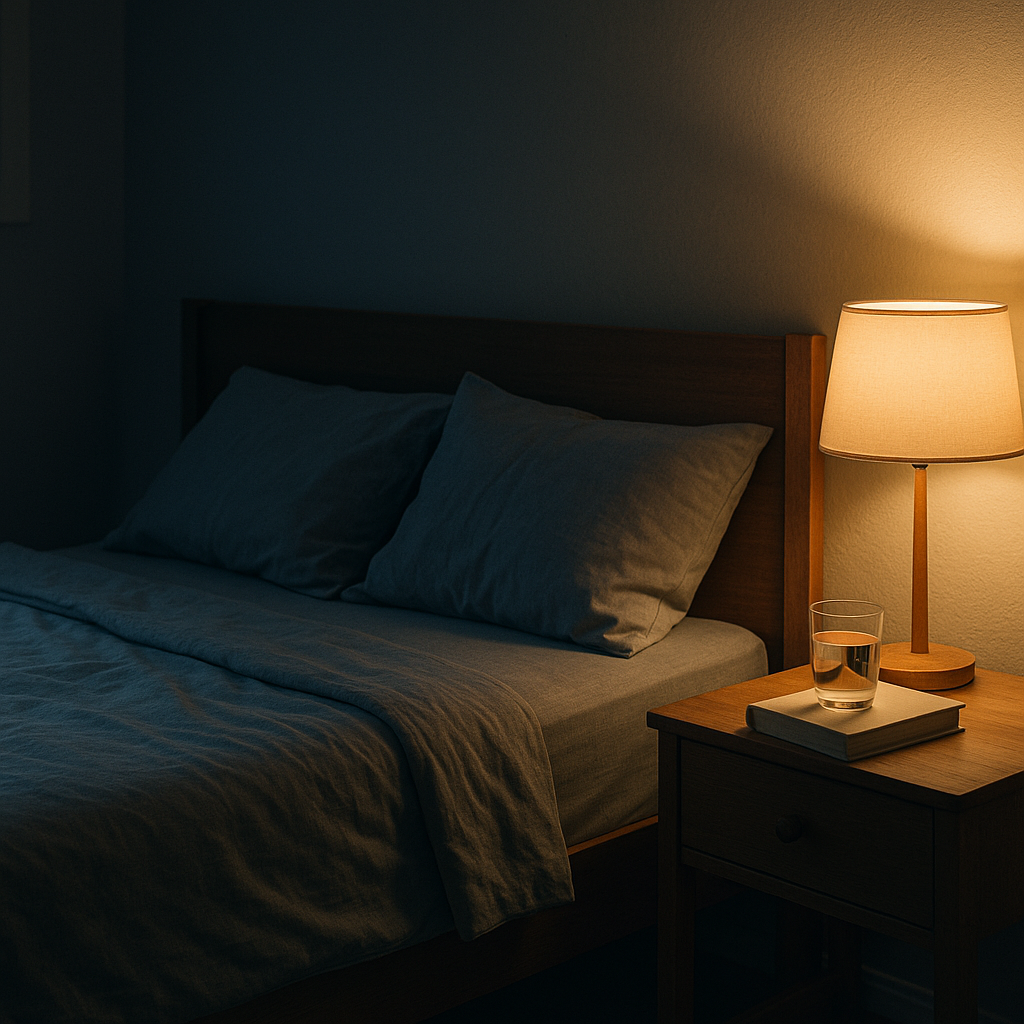 environment supporting rest as part of simple sleep hygiene tips” style=”display:block;width:100%;height:auto;max-width:1000px;margin:0 auto;”>
Why simple sleep hygiene tips work
Sleep is guided by two main systems: your body clock and your sleep drive. Your body clock is set by light and timing, while your sleep drive builds the longer you are awake. Many everyday habits – late caffeine, bright screens, irregular bedtimes – confuse these systems. By making small, consistent changes, you give your body clearer signals: now we are awake, now we are winding down, now it is time to sleep.
Sort your caffeine timing
Caffeine blocks adenosine, a chemical that helps you feel sleepy. It can stay in your system for 6 to 10 hours, so that innocent afternoon coffee might still be nudging your brain awake at midnight.
Over the next few days, try:
- Setting a caffeine cut-off time about 8 hours before bed. If you aim to sleep at 11pm, keep caffeine to before 3pm.
- Switching to decaf, herbal tea or water after your cut-off. Peppermint, chamomile or rooibos are gentle options.
- Not “chasing” tiredness with more caffeine. Notice the first yawn and use it as a cue to stretch, get some fresh air or have a glass of water instead.
If you are a heavy coffee drinker, reduce gradually to avoid headaches: cut one caffeinated drink every couple of days until your timing feels manageable.
Use light exposure to reset your body clock
Light is one of the most powerful simple sleep hygiene tips. Morning light tells your brain it is daytime, lifting mood and alertness. Dimmer light in the evening tells your body that night is coming.
Over the next few days, aim to:
- Get outside within an hour of waking, even for 5 to 10 minutes. Natural daylight is far stronger than indoor lighting.
- Work near a window where possible. If that is not an option, keep your main lights on in the morning and early afternoon.
- Dim lights 60 to 90 minutes before bed. Use lamps instead of bright ceiling lights and reduce screen brightness.
- Use night mode or blue-light filters on devices in the evening, and keep screens out of bed if you can.
Make your bedroom a sleep-friendly space
Your bedroom should signal rest, not work or scrolling. You do not need a full makeover – small tweaks can quickly change how it feels.
Focus on three basics:
- Darkness: Use blackout curtains or an eye mask. Cover bright LEDs with tape or turn devices fully off.
- Quiet: If noise is an issue, try earplugs or gentle white noise from a fan or app.
- Coolth: Most people sleep best in a slightly cool room. Open a window, use lighter bedding or wear breathable cotton.
Keep your bed mainly for sleep and intimacy. If you often work or watch stressful shows in bed, your brain can start to link the space with being alert rather than relaxed.
Build a realistic pre-bed routine
A pre-bed routine is like a runway that helps you land gently into sleep. It does not need to be long or complicated. Even 20 to 30 minutes of consistent, calming habits can help.
Over the next few nights, try:
- Choosing a regular “wind-down” time, roughly the same each evening.
- Switching to low-stimulation activities: reading a light book, stretching, gentle yoga, journalling or a warm shower.
- Keeping your phone out of arm’s reach, or in another room if possible.
- Writing down tomorrow’s to-do list so your brain is not trying to hold it all in mind.
If you find your mind racing, a simple breathing pattern can help: breathe in through the nose for 4 seconds, out for 6 seconds, and repeat for a few minutes. This lengthened exhale supports your body’s calming response.
How to handle waking in the night
Waking in the night is common, especially during stressful periods, perimenopause, new parenthood or after illness. The goal is not to force sleep, but to reduce the struggle around it.


Simple sleep hygiene tips FAQs
How long do simple sleep hygiene tips take to work?
Many people notice small improvements within a few days, especially when they adjust caffeine timing and light exposure. More consistent changes, like keeping regular wake times and a calming pre-bed routine, can take a couple of weeks to show their full effect. Think of it as teaching your body new patterns rather than looking for an instant fix.
Should I go to bed earlier if I am not sleepy?
Going to bed much earlier than usual when you are not sleepy can backfire, because you may lie awake and become frustrated. It is usually better to keep a steady wake time and only head to bed when you feel genuinely drowsy. If you are consistently exhausted, bring your bedtime forward in small steps of 15 minutes every few nights and pair this with calming pre-bed habits.
When should I see a doctor about my sleep problems?
Speak to a healthcare professional if poor sleep has lasted for more than a month, is affecting your mood, work or relationships, or if you snore loudly, gasp in your sleep or often wake unrefreshed with morning headaches. They can check for conditions like sleep apnoea, restless legs or underlying health issues, and help you find suitable treatment alongside lifestyle changes.