
There is a persistent idea in gym culture that if you do not drink your protein shake within 30 minutes of your last rep, you have somehow wasted your workout. It is repeated constantly, sold on tub labels, and accepted as gospel. The science, however, is considerably more nuanced. Protein timing does matter, but probably not in the way most people think, and the obsession with specific windows has distracted us from the far more practical question of how protein is spread across the whole day.
What Does the Research Actually Say About Protein Timing?
The “anabolic window” concept, the idea that muscle protein synthesis spikes immediately post-exercise and closes within an hour, was largely built on studies from the early 2000s that used fasted training subjects. When you train having not eaten for several hours, consuming protein immediately afterwards does produce a measurable benefit. But most people training at a commercial gym are not fasted. They have had breakfast, lunch, or a pre-workout snack. In that context, the urgency evaporates.
A substantial meta-analysis published in the Journal of the International Society of Sports Nutrition found that total daily protein intake was a far stronger predictor of lean mass gains than the specific timing of consumption. The window, researchers concluded, is considerably wider than the supplement industry has ever cared to admit, extending to several hours either side of training. That shifts the conversation entirely. Rather than scrambling for a shaker bottle mid-cooldown, the more productive question is: are you getting enough protein overall, and is it reasonably spread throughout the day?
Why Protein Distribution Matters More Than Exact Timing
Here is where the science becomes genuinely interesting for everyday health. Most people in the UK eat protein in a very skewed pattern: a modest amount at breakfast (if at all), a moderate amount at lunch, and a large portion crammed into the evening meal. Research from the British Nutrition Foundation and broader nutrition studies consistently shows this pattern is suboptimal for muscle protein synthesis, which is not just relevant to gym-goers but to anyone trying to maintain muscle mass as they age.
Muscle protein synthesis has a ceiling for any single meal. Consuming 60g of protein in one sitting does not produce double the anabolic effect of 30g. The excess amino acids are simply oxidised for energy. What research suggests instead is that spreading protein across three to four meals, each containing roughly 20–40g depending on your body weight and activity level, keeps muscle protein synthesis elevated more consistently across the day. Think of it less like a lever you pull once and more like a fire you need to keep fed.
For a person weighing around 75kg who is moderately active, something in the range of 1.6–2.0g of protein per kilogram of body weight daily is well supported by current evidence. That works out to roughly 120–150g per day, which is genuinely difficult to consume in one or two meals without feeling uncomfortably full or relying heavily on processed protein products.

Common Protein Myths Worth Dropping
“You can only absorb 30g of protein per meal”
This one has been debunked fairly thoroughly. The body can absorb far more than 30g per meal; the question is what it does with it all. Protein digestion and absorption are slower than many assume, meaning larger doses are not wasted but are processed over a longer period. The 30g figure was a rough rule of thumb that became treated as biological law.
“Plant protein is inferior for muscle building”
Plant proteins do tend to be lower in leucine, the key amino acid that triggers muscle protein synthesis, and some are incomplete on their own. However, combining sources across a meal or day, rice and lentils, hummus and wholegrain pitta, or opting for high-quality plant sources like soya, handles this well. Vegan athletes competing at elite level have demonstrated that protein source matters far less than total leucine exposure and overall intake.
“Protein shakes are essential”
They are convenient, not compulsory. A chicken breast, a tin of sardines, a pot of Greek yoghurt, or a serving of cottage cheese all deliver substantial protein with additional nutritional benefits. Whole food sources also tend to be more satiating, which matters considerably if weight management is part of your goal.
Practical Ways to Distribute Protein Through Your Day
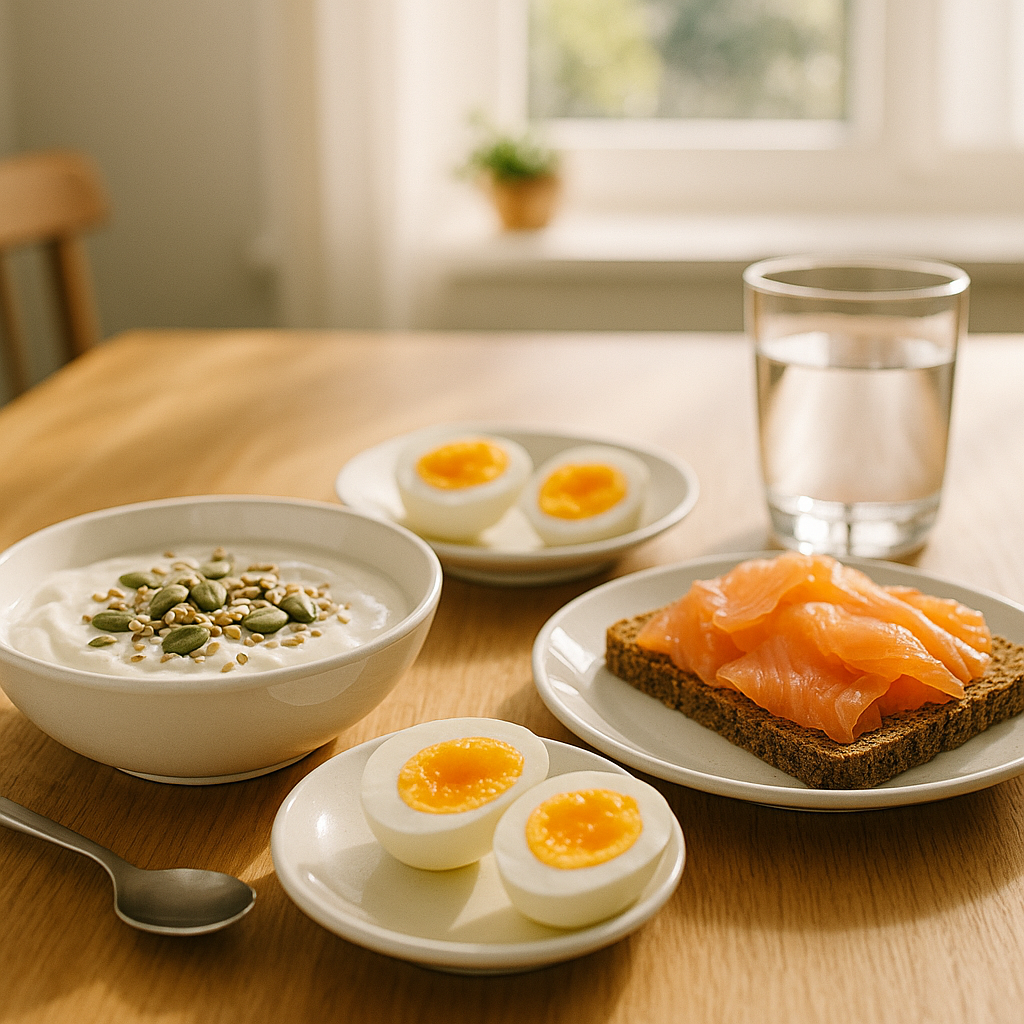
Getting protein right does not require meticulous tracking or a spreadsheet. A few straightforward habits go a long way. Start with a protein-anchored breakfast: eggs, smoked salmon on rye, Greek yoghurt with seeds, or even a high-quality protein porridge. This single change is one of the most impactful for people who currently skip breakfast or eat something predominantly carbohydrate-based. Research published by the British Nutrition Foundation consistently highlights breakfast protein as important for appetite regulation and muscle maintenance, particularly in older adults.
At lunch, make protein the starting point of the meal rather than an afterthought. Build around fish, meat, legumes, or eggs, and let carbohydrates and vegetables fill in around them. The same logic applies in the evening. If your dinner already tends to be protein-rich, shift some of that protein towards earlier in the day rather than adding more overall.
Pre- and post-workout nutrition does still carry value, particularly for those training intensely more than four times per week. Having protein within two to three hours of training on either side, rather than a precise 30-minute window, is more than sufficient. A handful of people in highly demanding vocations, professional athletes, construction workers, those operating heavy industrial equipment including precision tools like CNC Machining Centres, and other physically demanding roles, will benefit from paying closer attention to intra-day distribution simply because their protein turnover is considerably higher throughout the working day.
What About Protein Timing for Weight Loss?
Protein is the most satiating macronutrient. It reduces hunger hormones, increases feelings of fullness, and has a higher thermic effect than carbohydrates or fat, meaning the body burns more energy simply digesting it. For weight loss specifically, protein timing intersects with appetite management in a meaningful way. Eating protein early in the day tends to reduce overall calorie intake later, making an evening biscuit raid considerably less likely.
The message here is consistent: protein timing as a micromanaged, minute-by-minute strategy is largely unnecessary. But distributing protein intelligently across waking hours, prioritising it at breakfast, and ensuring no meal is entirely devoid of it, has solid evidence behind it. It is one of the more accessible nutritional adjustments most people can make without radically overhauling their diet.
The Takeaway
The post-workout window is real but forgiving. Total daily protein and how it is spread across the day matters considerably more than whether you consumed it at 17:32 or 18:05 after training. Aim for consistency, prioritise whole food sources where you can, and treat the timing conversation as a refinement rather than the foundation. Get the volume right first, and the rest follows naturally.
Frequently Asked Questions
Does protein timing actually affect muscle growth?
It has a modest effect, but total daily protein intake is a far stronger driver of muscle growth than precise timing. Consuming protein within a few hours of training on either side is sufficient for most people; there is no need to stress about a narrow 30-minute window.
How much protein should I eat per meal for muscle building?
Most research points to roughly 20–40g of protein per meal as effective for stimulating muscle protein synthesis, depending on body weight and activity level. Spreading this across three to four meals daily tends to produce better results than consuming most of your protein in one sitting.
Is it true you can only absorb 30g of protein at a time?
No, this is a persistent myth. The body can absorb larger amounts of protein; it simply takes longer to digest. The 30g figure was an overly simplified guideline that became mistakenly treated as a hard biological limit.
Does protein timing help with weight loss?
Yes, indirectly. Eating protein earlier in the day, particularly at breakfast, improves satiety and tends to reduce overall calorie intake later on. Protein also has a higher thermic effect than other macronutrients, meaning digesting it burns slightly more energy.
Are protein shakes necessary to hit your daily protein targets?
Not at all. Whole food sources like eggs, chicken, fish, Greek yoghurt, lentils, and cottage cheese are perfectly effective and often more satiating. Protein shakes are a convenient supplement for busy days, but they are not essential for meeting your daily protein goals.