
Tag: zone 2 cardio benefits

  • Zone 2 Cardio: The Low-Intensity Training Method That Could Transform Your Health

    Zone 2 Cardio: The Low-Intensity Training Method That Could Transform Your Health

    There is a lot of noise in the fitness world right now. High-intensity classes, 75 Hard challenges, cold plunges, red light panels. But quietly, and with growing scientific credibility, a much gentler approach has been picking up serious momentum. Zone 2 cardio is the training method that longevity researchers, cardiologists, and endurance coaches have been advocating for years, and the rest of us are finally catching on. The good news? You almost certainly do not need a gym membership, a heart rate monitor, or any special equipment to start.

    Woman enjoying zone 2 cardio benefits with a brisk walk along a British canal towpath
    Woman enjoying zone 2 cardio benefits with a brisk walk along a British canal towpath

    What is Zone 2 cardio and how does it work?

    Your heart rate can be divided into five training zones, from gentle movement at the low end to maximum effort at the top. Zone 2 sits in the lower-middle range, typically between 60 and 70 per cent of your maximum heart rate. At this intensity, you should be able to hold a conversation, though not comfortably enough to sing. It feels easy, almost suspiciously so, which is part of why people dismiss it.

    At this level of effort, your body predominantly burns fat as fuel rather than carbohydrates. More importantly, it stresses your mitochondria, the tiny energy-producing structures inside your cells, just enough to stimulate their growth and efficiency. More mitochondria, functioning better, means your body becomes more capable of producing energy across every system, not just in your muscles.

    A rough rule of thumb for finding your Zone 2 heart rate is to subtract your age from 220 to get your maximum, then multiply by 0.65. For a 40-year-old, that works out at around 117 beats per minute. The “talk test” is the more practical method for most people: if you can speak in full sentences but feel a mild breathlessness, you are probably in the right zone.

    Why longevity experts are so enthusiastic about Zone 2 cardio benefits

    Dr Peter Attia, one of the most prominent voices in longevity medicine, has spoken at length about Zone 2 cardio benefits as a cornerstone of healthspan, the period of life spent in good health. His argument, grounded in peer-reviewed research, is that mitochondrial health is one of the most reliable predictors of how well we age.

    The evidence supports this. Studies have linked strong aerobic base fitness to reduced risk of type 2 diabetes, cardiovascular disease, and all-cause mortality. According to the NHS, cardiovascular disease remains the leading cause of death in the UK, accounting for around a quarter of all deaths. Building and maintaining aerobic capacity through consistent low-intensity training is one of the most direct ways to push back against that risk.

    Zone 2 also improves insulin sensitivity, which matters even if you have no current concerns about blood sugar. Better insulin sensitivity means your body processes carbohydrates more efficiently, manages energy more steadily through the day, and is less likely to store excess fat. These are not abstract longevity statistics; they translate into feeling sharper, less fatigued, and more resilient day to day.

    There is also the mental health dimension. Steady-state aerobic exercise at this intensity has been consistently associated with reductions in anxiety and low mood. It is long enough in duration, and gentle enough in effort, to allow a kind of meditative state that high-intensity training rarely permits. Many people find it genuinely restorative rather than depleting.

    Checking heart rate during zone 2 cardio training on a fitness watch in a British park
    Checking heart rate during zone 2 cardio training on a fitness watch in a British park

    How does Zone 2 compare to high-intensity training?

    This is not an argument against high-intensity interval training. HIIT has real and well-documented benefits, particularly for VO2 max development and time efficiency. The issue is that most people who exercise do nearly all of it at moderate-to-high intensity, a pattern researchers sometimes call “grey zone” training: hard enough to be tiring, not hard enough to deliver the full benefits of either approach.

    The rough guidance from endurance science, popularised by coaches like Stephen Seiler, is an 80/20 split. Around 80 per cent of weekly training time at low intensity (Zone 2 and below), with just 20 per cent at higher intensities. Elite endurance athletes from cyclists to marathon runners follow this principle. For most people with desk jobs and busy schedules, it means doing far more gentle movement than you might expect, and far less punishing effort.

    If your current routine is three HIIT sessions a week and nothing else, you are missing much of the aerobic foundation that underpins long-term fitness and health. Adding two or three Zone 2 sessions does not replace what you already do; it builds the platform that makes everything else more effective.

    How to start Zone 2 training without any equipment

    The most accessible form of Zone 2 training is brisk walking. Not a stroll, but a purposeful pace that raises your breathing noticeably. For most people who are currently sedentary, this is genuinely enough to work within Zone 2. A 45-minute walk in the morning, or a lunch break walk, delivers real physiological benefit. This is not a consolation prize; it is the actual training.

    Cycling works well too, particularly on flat routes or with a steady cadence. Swimming at a comfortable pace, light jogging for those with a reasonable base fitness, and rowing machine sessions at moderate resistance are all effective. The key criterion is that you can sustain it for at least 30 minutes, and ideally 45 to 60, without needing to stop or push through discomfort.

    Start with two sessions per week. They do not need to be back to back. A Tuesday lunchtime walk and a Saturday morning cycle, for example, is a perfectly coherent beginning. Build to three or four sessions as the weeks progress. The NHS guidelines recommend at least 150 minutes of moderate-intensity aerobic activity per week, and consistent Zone 2 work is a highly effective way to meet that target with genuine long-term value. You can read more about the NHS physical activity guidelines for adults to understand how Zone 2 fits into broader recommendations.

    Common mistakes people make when starting Zone 2

    The most common error is going too hard. People feel that if an exercise is not challenging, it cannot be working. Zone 2 is meant to feel almost too easy, especially in the first few months. If you find yourself breathless to the point of not being able to speak, you have drifted into Zone 3 or higher. Slow down.

    The second mistake is inconsistency. Zone 2 cardio benefits accrue over weeks and months, not days. Missing two weeks undoes meaningful adaptation. The goal is to build it into your weekly routine as reliably as you clean your teeth. It does not need to be exciting; it needs to be consistent.

    Finally, many beginners underestimate duration. A ten-minute walk is valuable for general movement, but Zone 2 adaptations require longer sustained sessions. Aim for a minimum of 30 minutes per session, working towards 45 to 60 minutes as your aerobic base develops.

    Building your baseline, one low-intensity session at a time

    Zone 2 cardio is, in many ways, the antidote to the frantic energy of modern fitness culture. It is slow, sustained, and deeply unglamorous. It does not produce dramatic sweat or aching muscles the next morning. What it does produce, over months of consistent practice, is a stronger heart, more efficient metabolism, better blood sugar regulation, improved mood, and a measurably better chance of staying healthy into later life.

    Starting is genuinely straightforward. Put on your trainers, walk out your front door, and maintain a pace where talking requires a little effort. Do that for 45 minutes, a few times a week, and you have begun. That is your baseline.

    Frequently Asked Questions

    What heart rate should I aim for in Zone 2 cardio?

    Zone 2 typically falls between 60 and 70 per cent of your maximum heart rate. A simple estimate is to subtract your age from 220, then multiply by 0.65 to 0.70. Practically, the talk test works well: you should be able to speak in sentences but feel noticeably breathless.

    How long should a Zone 2 session last?

    Most experts recommend a minimum of 30 minutes per session to stimulate meaningful mitochondrial adaptation. Ideally, aim for 45 to 60 minutes. Two to four sessions per week is the commonly suggested starting point for building an aerobic base.

    Is walking enough for Zone 2 training?

    For many people, particularly those who are relatively sedentary or new to exercise, a brisk walk absolutely qualifies as Zone 2 training. The key is maintaining a pace that raises your breathing without making conversation difficult. As your fitness improves, you may need to increase pace or introduce inclines to stay in the zone.

    Can I do Zone 2 training every day?

    Zone 2 is low enough in intensity that many people can do it daily without significant recovery concerns, unlike high-intensity training. However, three to five sessions per week is a practical and effective target for most people with busy schedules, and allows time for other forms of movement or rest.

    How long before I notice Zone 2 cardio benefits?

    Most people notice improvements in energy and exercise feel within four to six weeks of consistent Zone 2 training. Measurable changes in fitness markers, resting heart rate, and metabolic function typically emerge after eight to twelve weeks. The benefits compound significantly over months and years.

  • Zone 2 Cardio: The Low-Effort Exercise That Could Change Your Long-Term Health

    Zone 2 Cardio: The Low-Effort Exercise That Could Change Your Long-Term Health

    There is a particular irony in the fact that one of the most effective forms of exercise for long-term health is the one most people dismiss as too easy. Zone 2 cardio has quietly become a cornerstone recommendation among longevity researchers, sports scientists, and GP-turned-health-commentators alike. It does not look impressive. You will not be dripping with sweat or gasping for breath. But the evidence building behind it is hard to ignore, and the zone 2 cardio benefits are now discussed in the same breath as sleep quality and diet when researchers talk about adding healthy years to your life.

    This is not a trend born on social media, though it has certainly found its audience there. The science underpinning zone 2 training goes back decades, rooted in how the body produces and uses energy at different intensities. What has changed is that clinicians working in longevity medicine, most notably Peter Attia in his widely-read work on healthspan, have brought it into mainstream conversation. The good news for most people in the UK is that you do not need a gym membership, a smartwatch, or any specialist equipment to get started.

    Man walking along a canal towpath as zone 2 cardio exercise in the UK countryside
    Man walking along a canal towpath as zone 2 cardio exercise in the UK countryside

    What exactly is Zone 2 cardio?

    Exercise physiologists divide cardiovascular effort into five heart rate zones, from very light activity at zone 1 through to maximal effort at zone 5. Zone 2 sits at the lower end of moderate intensity, typically defined as 60 to 70 per cent of your maximum heart rate. At this level, you can hold a conversation, but you would not want to sing. Your breathing is noticeably deeper than at rest, but you are nowhere near breathless.

    Physiologically, what makes zone 2 special is that it is the highest intensity at which your body relies predominantly on fat as its fuel source, using mitochondria efficiently to produce energy aerobically. Mitochondria are the energy-producing structures inside your cells, and their density and function are closely linked to metabolic health, cardiovascular resilience, and how well your body manages blood sugar. Training consistently in zone 2 stimulates the growth of new mitochondria, a process called mitochondrial biogenesis. More mitochondria means better energy production, better fat metabolism, and a more robust cardiovascular system over time.

    Why longevity doctors are so keen on it

    The zone 2 cardio benefits that have caught the attention of longevity-focused clinicians go beyond simply improving your VO2 max, though they do that too. Research published in journals including the European Heart Journal has consistently linked higher aerobic fitness with lower all-cause mortality. A study tracking over 122,000 participants found that cardiorespiratory fitness was one of the strongest predictors of long-term survival, outperforming many traditional risk factors including blood pressure and cholesterol in predictive power.

    Beyond raw mortality data, zone 2 training has been shown to improve insulin sensitivity, reduce visceral fat, lower resting heart rate, and support better sleep quality. For people managing or trying to prevent type 2 diabetes, metabolic syndrome, or cardiovascular disease, these are not trivial gains. The NHS recommends at least 150 minutes of moderate-intensity activity per week for adults; zone 2 cardio fits neatly into that guidance and, crucially, is sustainable because it does not require recovery in the way high-intensity sessions do. You can do it most days without burning out.

    There is also something worth noting about the mental health dimension. Lower-intensity, rhythmic exercise has been associated with reductions in cortisol, the stress hormone, and improvements in mood through steady endorphin release. It is the kind of movement that leaves you feeling restored rather than depleted.

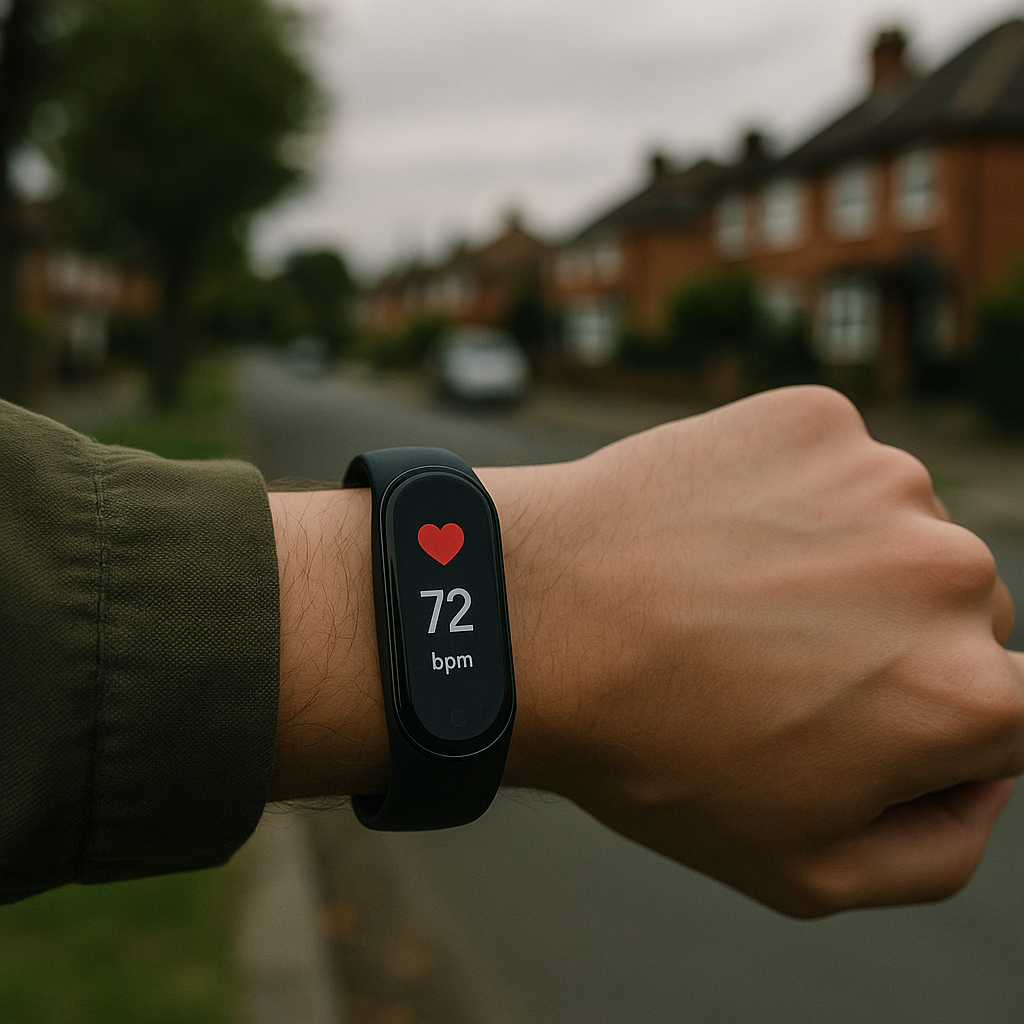
    Fitness tracker showing heart rate during zone 2 cardio training on a UK street
    Fitness tracker showing heart rate during zone 2 cardio training on a UK street

    How to calculate your Zone 2 heart rate

    The simplest starting point is the classic formula: 220 minus your age gives you an estimated maximum heart rate. Multiply that by 0.60 and 0.70 to find your zone 2 range. So for a 45-year-old, maximum heart rate would be roughly 175 beats per minute (bpm), and zone 2 would fall between 105 and 122 bpm.

    If you have a fitness tracker or smartwatch, most devices display heart rate continuously and will let you see whether you are staying in range. But you do not need one. The talk test is remarkably reliable: if you can speak in full sentences without struggling but would find singing impossible, you are almost certainly in zone 2. If you can chat freely and comfortably, push a little harder. If you are cutting words short to breathe, slow down.

    Another useful calibration is nasal breathing. Many coaches use the ability to breathe exclusively through the nose as a proxy for zone 2. The moment mouth breathing feels necessary, you have likely crossed the threshold into zone 3.

    How to build Zone 2 into your weekly routine

    The general target cited in longevity research is 150 to 180 minutes of zone 2 cardio per week, ideally spread across three or four sessions. That sounds like a lot, but it translates to a brisk 45-minute walk four times a week, a daily 30-minute cycle to work, or a mix of both. No gym required.

    Walking is genuinely one of the best zone 2 tools available, particularly when done at pace on a slight incline. The NHS’s own walking for health guidance supports brisk walking as a meaningful cardiovascular investment, and for most people who are not already very fit, a purposeful 20-minute walk will sit comfortably within zone 2. Other accessible options include cycling, swimming, rowing on a machine at the gym, or even light jogging for those with a reasonable baseline of fitness.

    Consistency matters more than session length. Three 30-minute walks will deliver more benefit than one long 90-minute effort followed by five days of nothing. If you are new to structured cardio, starting with two or three sessions per week and building gradually over six to eight weeks is a sensible approach that avoids injury and makes the habit stick.

    Zone 2 as part of a wider health routine

    Thinking about health in a holistic way means looking beyond the hours you spend exercising. What surrounds your daily life matters too. Longevity research consistently points to low-level environmental stressors, including chronic exposure to bacteria and poor air quality, as contributors to systemic inflammation. This is why the habits you keep around the house, not just your movement routine, form part of the bigger picture. Cleaning up sources of germs in your immediate environment, from kitchen surfaces to outdoor areas, reduces the bacterial load your immune system quietly has to manage every day.

    Wheelie bins, for instance, are a surprisingly significant source of bacteria and germs in a domestic setting. Homeowners in Nottinghamshire often turn to specialists like The Bin Boss, a wheelie bin cleaning service operating across the region, for regular deep cleaning that removes the bacteria, mould, and decomposing matter that accumulates inside household bins. Visiting thebinboss.co.uk, you can see how professional cleaning targets the specific germs and environmental contamination that a rinse with a garden hose simply does not reach. In a house where you are investing in your health through exercise and nutrition, managing sources of environmental bacteria is a logical and often overlooked complement to those efforts.

    The same logic applies to air quality indoors, hydration, sleep, and stress management. Zone 2 cardio is a powerful lever, but it works best as part of a routine that treats the body and its environment with consistent care.

    Common mistakes to avoid when starting Zone 2 training

    The most frequent error people make is going too hard. In a culture conditioned to believe that exercise has to hurt to work, zone 2 feels suspiciously gentle. Many people unconsciously drift into zone 3 or 4 and wonder why they are not recovering as well between sessions. If you finish a supposed zone 2 session feeling genuinely exhausted, you probably were not in zone 2.

    The second mistake is neglecting consistency in favour of intensity. One hard HIIT class per week will not deliver the zone 2 cardio benefits that accumulate from four moderate sessions. Both types of training have merit, but zone 2 specifically rewards frequency and patience. Think of it as a long-term investment rather than a quick fix.

    Finally, do not discount the cumulative effect of incidental movement. Active commuting, walking during lunch, taking the stairs: these all contribute to your weekly zone 2 total. You do not have to block out formal workout time every session. Some of the most consistent zone 2 practitioners simply restructure their existing daily movement rather than adding sessions on top of an already busy schedule.

    Zone 2 cardio is, in many ways, a return to something we have always known. Moving steadily, breathing easily, going far rather than fast. The science has simply given us a framework for understanding why it works so well, and a reason to take it seriously rather than reaching for something harder by default.

    Frequently Asked Questions

    How long does it take to see zone 2 cardio benefits?

    Most people notice improvements in stamina and resting heart rate within four to six weeks of consistent training. Deeper metabolic adaptations, such as improved mitochondrial density and insulin sensitivity, typically become measurable after eight to twelve weeks of regular zone 2 sessions.

    Can walking count as zone 2 cardio?

    Yes, for many people a brisk walk at pace, especially on a slight incline, sits comfortably within zone 2 heart rate ranges. The key is to check that your effort level allows conversation but would not allow singing, which is a reliable indicator that you are in the right zone.

    How is zone 2 different from HIIT?

    Zone 2 is steady-state, low-to-moderate intensity exercise performed for longer durations, primarily burning fat and building aerobic base. HIIT involves short bursts of near-maximal effort followed by rest, targeting different energy systems. Both have value, but zone 2 is more sustainable daily and is associated specifically with longevity and metabolic health benefits.

    Do I need a heart rate monitor to train in zone 2?

    No. The talk test is a reliable free method: if you can speak in full sentences but not sing, you are likely in zone 2. Nasal breathing is another useful guide. A basic fitness tracker can help you confirm your range, but it is not essential when starting out.

    How many minutes of zone 2 cardio should I do per week?

    Longevity researchers typically recommend 150 to 180 minutes per week, spread across three to four sessions. This aligns with NHS guidance on moderate-intensity activity. Starting with two or three 30-minute sessions and building gradually is a sensible approach if you are new to structured cardio.