Author: Alex Mason

  • The Case for Rest Days: Why Recovery Is the Part of Fitness Most British People Skip

    The Case for Rest Days: Why Recovery Is the Part of Fitness Most British People Skip

    There is a particular kind of guilt that settles in on a rest day. You scroll through your phone, see someone logging a 6am run, and that quiet voice pipes up: you should be doing something. It is a very British affliction, this conflation of stillness with laziness. We are culturally wired to admire grind and quietly distrust ease. But when it comes to fitness and health, that mindset is costing people real progress, and sometimes, real wellbeing.

    Rest days are not a gap in your training plan. They are the plan. The physiological work of getting fitter, stronger, and more resilient actually happens when you stop, not when you are moving. Understanding what is happening inside your body during recovery changes the way you think about the whole thing.

    Person resting at home as part of rest days fitness recovery UK routine
    Person resting at home as part of rest days fitness recovery UK routine

    What Actually Happens to Your Body on a Rest Day

    When you exercise, particularly resistance training or high-intensity cardio, you create microscopic damage in muscle fibres. This is not a bad thing. It is the whole point. But repair requires time and resources. During rest, satellite cells are recruited to the damaged tissue, protein synthesis increases, and the muscle rebuilds slightly thicker and stronger than before. Skip that window, and you interrupt the cycle. You get the damage without the adaptation.

    Muscle repair is only part of the picture. The nervous system takes a significant hit from hard training too. The sympathetic nervous system, your fight-or-flight branch, stays elevated after intense exercise. Heart rate variability drops, cortisol remains higher than baseline, and the body lingers in a low-grade state of stress. Pushing straight back into training before that system has settled means you are compounding physiological load on a system that has not finished processing the last session.

    Then there is the hormonal side. Testosterone, growth hormone, and IGF-1 all play roles in tissue repair and adaptation. These are not exclusively about building muscle. They support bone density, mood regulation, and immune function too. Chronic under-recovery suppresses them. Research published by Sport England and echoed by NHS guidance consistently links overtraining without adequate rest to increased injury rates, persistent fatigue, disrupted sleep, and low mood. These are not minor inconveniences. They are signals that the body’s repair systems are overwhelmed.

    Why British Fitness Culture Makes Rest Feel Wrong

    A lot of this comes down to how fitness is sold to us. Gym chains advertise relentlessness. Social media rewards visible effort. The language around training is militaristic: no days off, grind culture, push through the pain. It sounds motivating. It is also physiologically illiterate.

    The reality is that elite athletes spend a significant proportion of their training time in recovery. British Cycling, one of the most successful sports programmes this country has ever produced, built its entire methodology around marginal gains, and rest was not peripheral to that. It was structural. The athletes who last the longest, perform the most consistently, and stay injury-free are the ones who treat recovery with the same seriousness as the hard sessions.

    For most people training three to five times a week, the sweet spot involves at least one to two dedicated rest days. What those days look like depends on the individual, but the principle holds regardless of whether you are training for a half marathon, lifting in a local gym, or doing a home workout from a YouTube video.
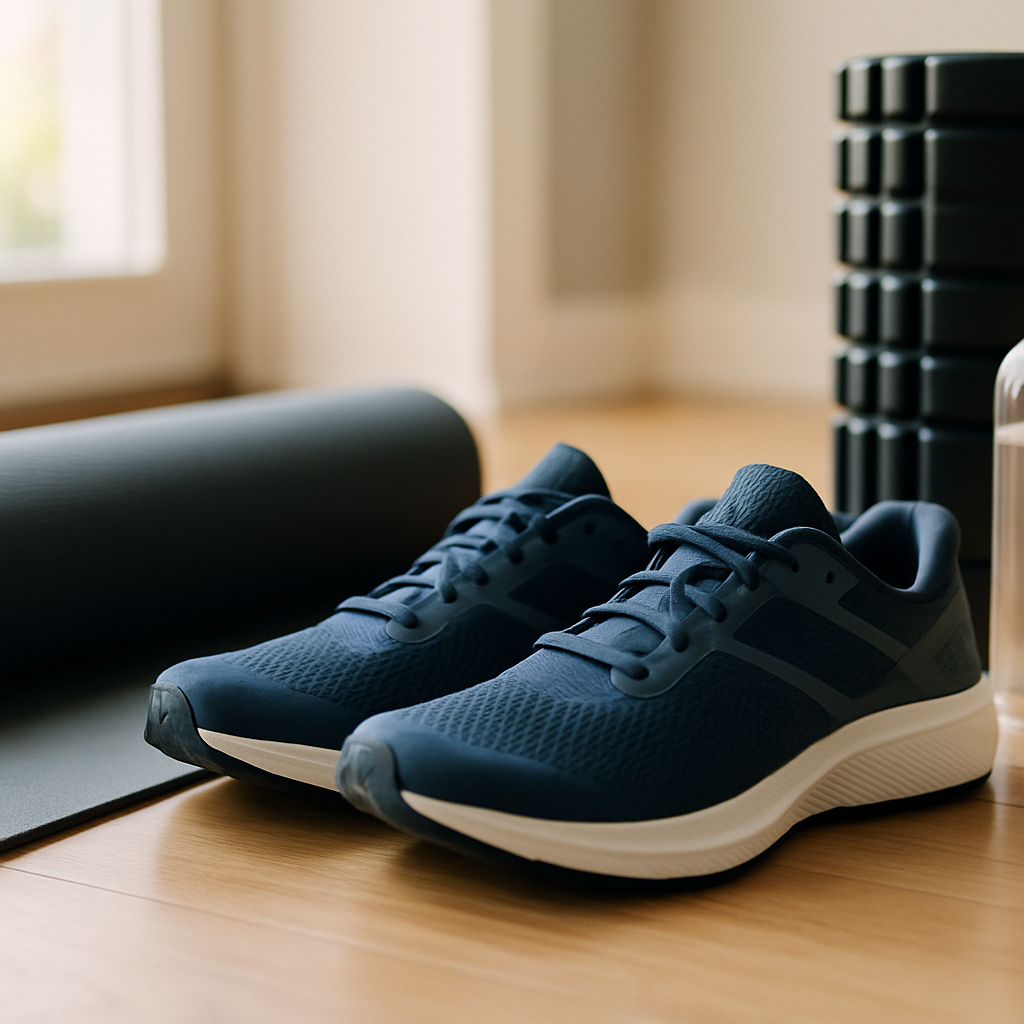
    Active recovery equipment for rest days fitness recovery UK
    Active recovery equipment for rest days fitness recovery UK

    Active Recovery vs Genuine Rest: What Is the Difference?

    Not every rest day looks the same, and that is worth understanding. There are two broadly distinct approaches, and both have their place.

    Active Recovery

    Active recovery means light movement that supports the body’s repair process without adding meaningful physiological load. Think a gentle 30-minute walk, easy cycling on flat ground, slow yoga, or a relaxed swim. The goal is to increase circulation to sore muscles, which helps clear metabolic waste products like lactate, without triggering further stress on the nervous system or initiating significant muscle breakdown.

    Active recovery works well the day after a hard session. Many people find it reduces next-day stiffness more effectively than complete inactivity. It also keeps the habit of movement without undermining the recovery process. If you find complete rest days mentally difficult, a low-intensity walk through a local park or 20 minutes of mobility work is genuinely beneficial, not a compromise.

    Genuine Rest

    Complete rest means exactly that: no structured exercise, no compensatory movement to feel productive. This is appropriate after a particularly demanding week, following an event like a race or a heavy block of training, or when the body is sending clear signals, persistent soreness, elevated resting heart rate, disrupted sleep, or just that heavy, flat feeling where everything feels like an effort.

    Genuine rest is also where sleep earns its status as the single most powerful recovery tool available. During deep sleep stages, growth hormone release peaks, tissue repair accelerates, and the nervous system undergoes its deepest restoration. The NHS recommends adults aim for seven to nine hours of sleep per night, and for anyone training regularly, the upper end of that range is where the real adaptation happens.

    Signs You Are Not Recovering Properly

    Some signals are obvious. Persistent muscle soreness that does not resolve between sessions, recurring niggles and minor injuries, a noticeable plateau in performance despite consistent training effort. Others are subtler: waking up tired even after a full night’s sleep, a low mood or increased irritability, reduced motivation to train at all, and a tendency to get every cold going. These are the hallmarks of under-recovery, and they are surprisingly common amongst people who would describe themselves as committed to their health.

    The irony is that training harder in this state makes things worse, not better. The body is not a machine that improves with more input. It improves with the right ratio of stress and recovery. Shift that ratio too far in either direction and progress stalls.

    Building Rest Into Your Week Without Losing Momentum

    The practical shift is straightforward, even if the mental one takes longer. Schedule rest days with the same intention you bring to your training sessions. Block them out. Treat them as non-negotiable rather than something that happens when life gets in the way.

    On active recovery days, keep intensity genuinely low. If you find yourself picking up the pace on what was meant to be a gentle walk, that is a sign the habit of pushing is running the show rather than your body. On full rest days, focus on the things that support recovery elsewhere: quality nutrition with adequate protein, proper hydration, and prioritising sleep.

    It helps to reframe what rest days represent. They are not absence of effort. They are where the effort pays out. Every hard session you have done this week is being processed, integrated, and built upon right now, whilst you are sitting still. That is not laziness. That is training.

    Rest days fitness recovery in the UK context often gets complicated by the guilt around being seen to relax. But the body does not care about appearances. It cares about balance. Give it what it actually needs, and it will perform far better on the days you ask it to.

    Frequently Asked Questions

    How many rest days do I need per week?

    Most people training at moderate to high intensity benefit from one to two dedicated rest or active recovery days per week. If you are training more than five days a week, monitoring signs of fatigue such as poor sleep and persistent soreness is important, as you may need more recovery time than you think.

    Is it bad to exercise every day without a rest day?

    Training every day without adequate rest can lead to overtraining syndrome, which includes symptoms like fatigue, declining performance, disrupted sleep, and increased injury risk. Even if the intensity varies, the nervous system still needs recovery periods to fully restore itself between hard efforts.

    What is the difference between active recovery and a rest day?

    Active recovery involves very light, low-intensity movement such as a gentle walk or easy yoga, designed to support circulation and reduce stiffness without adding physiological load. A full rest day means no structured exercise, allowing deeper restoration of muscles, hormones, and the nervous system.

    Can I lose fitness by taking rest days?

    No. Fitness adaptations actually occur during recovery, not during exercise. Missing one or two days of training per week will not cause detraining, which typically requires at least two to three weeks of complete inactivity before any meaningful fitness loss occurs.

    What should I eat on a rest day to support recovery?

    Protein remains important on rest days to support ongoing muscle repair, so aim to maintain your usual intake rather than cutting back significantly. Staying hydrated and eating enough carbohydrates to replenish glycogen stores will also help prepare your body for the next training session.


  • Perimenopause and Exercise: How to Adjust Your Training When Your Body Is Changing

    Perimenopause and Exercise: How to Adjust Your Training When Your Body Is Changing

    Somewhere in your late thirties or forties, things start to feel a bit off. Your usual run feels harder than it used to. Recovery takes longer. The weight around your middle that was never really there before seems to have arrived quietly and settled in. You’re doing the same things you’ve always done, but your body is responding differently. This isn’t a lack of discipline. It’s perimenopause, and it changes the rules.

    Perimenopause can begin as early as 35, though most women in the UK notice the shift somewhere between 40 and 50. The NHS estimates the average age of menopause itself is 51, meaning the transitional phase before it can last anywhere from a few months to over a decade. During that time, oestrogen and progesterone levels fluctuate unpredictably, and those fluctuations have a direct and significant effect on how your body handles exercise, builds muscle, stores fat, and recovers from effort.

    Woman in her forties doing strength training at home, relevant to perimenopause exercise advice UK
    Woman in her forties doing strength training at home, relevant to perimenopause exercise advice UK

    What Hormonal Shifts Actually Do to Your Body

    Oestrogen isn’t just a reproductive hormone. It plays a role in bone density, tendon health, cardiovascular function, muscle repair, mood regulation, and insulin sensitivity. When levels begin to decline and fluctuate during perimenopause, the downstream effects are wide-ranging.

    Muscle loss accelerates. Research published by the British Menopause Society notes that women can lose muscle mass at a faster rate once oestrogen starts declining, which compounds the natural age-related muscle loss (sarcopenia) that affects everyone from their late thirties onward. At the same time, fat redistribution tends to shift from the hips and thighs toward the abdomen, a change driven partly by lower oestrogen and partly by changes in cortisol sensitivity.

    Sleep disruption, common in perimenopause due to night sweats and progesterone changes, makes recovery from training genuinely harder. Your body repairs muscle tissue and consolidates adaptation during deep sleep. Less of it means longer recovery windows and a higher risk of overtraining if you push as hard as you used to.

    There’s also the mood dimension. Fluctuating oestrogen affects serotonin production and dopamine pathways, which means you may feel more anxious, low, or emotionally volatile. Exercise helps, but the wrong kind, at the wrong intensity, can tip you further into sympathetic overdrive and worsen how you feel.

    Why Your Old Training Plan May Not Be Working Anymore

    Many women find that the approach that kept them fit and lean in their twenties and thirties stops working in their forties. High-intensity interval training five days a week, low-calorie dieting combined with heavy cardio, long endurance sessions without adequate fuelling: these strategies can increase cortisol, suppress recovery, and actively make perimenopausal symptoms worse.

    The perimenopausal body is already operating under hormonal stress. Adding physical stress on top without accounting for recovery can drive inflammation, disrupt sleep further, and make fat loss harder rather than easier. This doesn’t mean you should train less. It means you should train smarter.

    Close-up of resistance training grip, illustrating perimenopause exercise advice UK for strength building
    Close-up of resistance training grip, illustrating perimenopause exercise advice UK for strength building

    The Exercise Shifts That Actually Help During Perimenopause

    Prioritise resistance training above everything else

    This is the single most evidence-backed adjustment you can make. Lifting weights, using resistance bands, or doing bodyweight strength work preserves the muscle mass that perimenopause is trying to reduce. It supports bone density at a time when fracture risk begins to rise. It improves insulin sensitivity, which helps with fat redistribution. And it boosts metabolism in a way that cardio alone simply doesn’t.

    Aim for at least two to three sessions of progressive resistance training per week. Progressive means gradually increasing load, reps, or difficulty over time. You don’t need a gym: a set of dumbbells and a few compound movements (squats, hip hinges, rows, overhead presses) done consistently will make a meaningful difference.

    Keep some high-intensity work, but be selective

    Two well-structured HIIT sessions per week can support cardiovascular health, improve mitochondrial function, and help manage weight during perimenopause. The problem is when intensity becomes daily and recovery becomes an afterthought. Keep the effort high when you do it, but build in full recovery days around it.

    Lean into low-intensity, steady-state cardio for mood and recovery

    Zone 2 cardio, the kind where you can hold a conversation without gasping, is brilliant during this life stage. It supports cardiovascular health without driving up cortisol, and walking in particular has strong evidence behind it for improving mood, regulating blood sugar, and reducing anxiety. Many women in the UK find that a 30-45 minute walk daily becomes a cornerstone of their wellbeing during perimenopause, and there’s real science behind why that feels so good.

    Build recovery in as a non-negotiable

    Rest days are not optional. Your body needs more time to recover during perimenopause than it did ten years ago, and training through genuine fatigue is counterproductive. Sleep, adequate protein intake (most UK women are under-eating protein, particularly during this phase), hydration, and stress management are all part of training now, not separate from it.

    Fuelling for a Perimenopausal Body

    Nutrition shifts matter here too. Protein needs increase because muscle repair is harder. Most UK dietary guidelines suggest 0.75g per kilogram of body weight, but for active women in perimenopause, many specialists recommend closer to 1.2 to 1.6g per kilogram. That means prioritising eggs, chicken, fish, legumes, Greek yoghurt, and similar sources at every meal, not just around workouts.

    Refined carbohydrates and ultra-processed foods have a more pronounced effect on blood sugar and inflammation during this phase, so it’s worth stabilising energy through whole foods, fibre, and healthy fats. This isn’t about restriction. It’s about working with your hormonal environment rather than against it.

    When to Seek Support

    If your symptoms are significantly affecting your quality of life, exercise capacity, or mental health, it’s worth speaking with your GP. The NHS menopause guidance outlines treatment options including HRT, which for many women dramatically improves energy, mood, sleep, and exercise tolerance. Organisations like the British Menopause Society can also point you toward accredited UK specialists.

    Perimenopause isn’t a reason to wind down your fitness. For a lot of women, it’s actually the period when they start training with more intention and self-knowledge than ever before. Your body is changing, but it is not broken. Adjust the approach, not the ambition.

    Frequently Asked Questions

    What exercises are best during perimenopause?

    Resistance training is the most important form of exercise during perimenopause, as it preserves muscle mass, supports bone density, and improves metabolism. Combining two to three strength sessions per week with regular walking and selective high-intensity intervals gives the best all-round results.

    Why is it harder to lose weight during perimenopause even when exercising?

    Declining oestrogen shifts fat storage toward the abdomen, while fluctuating hormones affect insulin sensitivity and cortisol regulation. High-stress training approaches can make this worse. Prioritising resistance training, adequate protein, and sleep tends to be more effective than simply doing more cardio.

    Can exercise help with perimenopausal mood changes and anxiety?

    Yes. Regular exercise, particularly resistance training and low-intensity steady-state cardio like walking, has strong evidence for improving mood, reducing anxiety, and supporting serotonin regulation. Avoiding excessive high-intensity training, which can increase cortisol, is also important for emotional balance.

    How does perimenopause affect exercise recovery?

    Sleep disruption, lower oestrogen, and changes in progesterone all slow muscle repair and increase recovery time. Women in perimenopause generally need more rest days, higher protein intake, and better sleep hygiene to recover properly between training sessions.

    Should I speak to my GP about perimenopause and exercise?

    If your symptoms are affecting your energy, mood, sleep, or ability to train, it’s worth a GP conversation. HRT and other NHS-supported treatments can meaningfully improve exercise tolerance and wellbeing during this phase. The NHS website has clear, up-to-date guidance on perimenopause and treatment options.

  • What Is Inflammaging, and Can Your Daily Habits Actually Slow It Down?

    What Is Inflammaging, and Can Your Daily Habits Actually Slow It Down?

    Your immune system is meant to flare up, fight something off, and then calm down. That’s acute inflammation doing its job. But there’s a quieter, slower process that researchers have been paying close attention to over the past two decades: a persistent, low-level inflammatory state that builds gradually as we age. Scientists call it inflammaging, a portmanteau of inflammation and ageing, and the evidence linking it to conditions like type 2 diabetes, cardiovascular disease, cognitive decline, and even depression is substantial enough to take seriously.

    The good news is that inflammaging isn’t something that just happens to you. Daily choices, particularly around food, sleep, movement, and stress, appear to meaningfully influence the pace at which this background inflammation accumulates. None of this is about expensive supplements or extreme protocols. It’s about the ordinary stuff, done consistently.

    Woman preparing an anti-inflammatory meal at home, relevant to understanding inflammaging through diet
    Woman preparing an anti-inflammatory meal at home, relevant to understanding inflammaging through diet

    What exactly is inflammaging?

    The term was coined by Italian immunologist Claudio Franceschi around the year 2000. The concept describes how, as we get older, the immune system shifts into a kind of low-level alert state. Inflammatory markers such as interleukin-6 (IL-6) and C-reactive protein (CRP) tend to rise with age even in people who appear broadly healthy. This isn’t the dramatic swelling you’d see with an infection or injury; it’s subtle, often undetectable without a blood test, and largely symptom-free for years.

    Over time, however, this chronic low-grade inflammation appears to accelerate tissue damage, impair cellular repair, and increase susceptibility to age-related disease. Think of it less like a fire and more like a very slow smoulder that gradually weakens the building around it.

    How ultra-processed food feeds the fire

    The relationship between diet and inflammation is one of the more robust areas of nutritional research. Ultra-processed foods (UPFs), a category that now makes up roughly 57% of the average UK adult’s calorie intake according to research from the University of São Paulo analysed with UK dietary data, are consistently associated with raised inflammatory markers.

    UPFs are broadly foods that have been industrially formulated with ingredients you wouldn’t find in a home kitchen: emulsifiers, modified starches, artificial colours, flavour enhancers. Think supermarket chicken nuggets, pre-packaged ready meals, most flavoured crisps, and cheap sliced bread with a long shelf life. These aren’t just empty calories; several emulsifiers used in UPFs appear to disrupt the gut lining and alter the microbiome in ways that prime the immune system toward a more inflammatory baseline.

    Reducing UPF intake doesn’t require a complete dietary overhaul. Prioritising whole foods, oily fish like mackerel or sardines (rich in omega-3 fatty acids), a wide variety of vegetables, legumes, nuts, and olive oil, is a reasonable, evidence-backed starting point. The Mediterranean dietary pattern has some of the strongest data behind it in terms of reducing markers like CRP and IL-6. You don’t need to move to Tuscany; you just need to nudge the ratio.

    Sleep and the inflammatory clock

    Poor sleep is one of the most reliable ways to accelerate inflammaging, and it’s one that many people underestimate. Research consistently shows that sleeping fewer than six hours a night is associated with significantly elevated inflammatory markers, while disrupted or fragmented sleep (even at adequate total duration) can have a similar effect.

    During deep sleep, the body carries out critical maintenance: clearing cellular debris from the brain, regulating cortisol, and modulating immune function. Cutting that short on a chronic basis is roughly analogous to never letting a factory run its overnight maintenance cycle. Things start to accumulate. For practical guidance on sleep hygiene, the NHS provides a reliable evidence-based framework at nhs.uk.

    Quiet morning rest routine as part of managing inflammaging through stress reduction and sleep
    Quiet morning rest routine as part of managing inflammaging through stress reduction and sleep

    Movement: the anti-inflammatory medicine hiding in plain sight

    Physical activity has a direct anti-inflammatory effect, and this is one of the more exciting findings in the inflammaging space. Skeletal muscle, when it contracts, releases signalling molecules called myokines. Some of these, particularly IL-6 produced acutely during exercise (which behaves differently to chronically elevated IL-6), appear to have downstream anti-inflammatory effects.

    You don’t need to be training for a marathon. The evidence supports moderate, consistent movement: brisk walking, swimming, cycling, strength training two to three times a week. A fortnight of sofa-bound inactivity is enough to measurably worsen inflammatory markers in previously active individuals. Consistency, in other words, is the mechanism. The body responds to what it’s repeatedly asked to do.

    There’s also a compounding benefit here. Regular movement improves sleep quality, helps regulate blood glucose (a key driver of inflammatory signalling), and reduces visceral fat, which is itself an active producer of pro-inflammatory cytokines. These effects aren’t separate; they reinforce each other, which is why thinking about body systems as isolated problems rarely serves us well.

    Stress, cortisol, and chronic immune activation

    Psychological stress activates the sympathetic nervous system and triggers cortisol release. In short bursts, this is entirely appropriate and not harmful. But chronic stress, the low-level ambient kind that many people in the UK experience through financial pressure, work demands, or poor work-life balance, keeps cortisol elevated for sustained periods. And cortisol, over time, has a paradoxical effect on inflammation: it initially suppresses it, but prolonged exposure appears to reduce immune cells’ sensitivity to cortisol’s signal, effectively removing the brake.

    This is where process efficiency offers an interesting analogy. When a system is chronically overloaded and never gets a chance to reset, its ability to manage any individual demand degrades. The same is true of the stress-immune axis. Giving the nervous system regular opportunities to downregulate, through breathwork, time in green spaces, social connection, or deliberate rest, isn’t indulgent; it’s genuinely protective.

    Mindfulness-based practices have decent evidence behind them specifically for reducing inflammatory markers. A 2019 review in Brain, Behaviour, and Immunity found that mindfulness meditation produced small but meaningful reductions in circulating CRP. This isn’t magic; it’s physiology.

    What inflammaging research actually tells us to do

    The frustrating and liberating truth is that there’s no single lever to pull. Inflammaging appears to be a cumulative product of many inputs, which means there’s no silver bullet, but also means there are many places to make meaningful progress. The habits most consistently supported by research are:

    • Reducing ultra-processed food and increasing dietary variety, particularly fibre-rich plant foods and oily fish
    • Protecting sleep, both duration (seven to nine hours for most adults) and quality
    • Moving regularly, with a mix of aerobic activity and resistance training across the week
    • Managing chronic psychological stress through whatever sustainable methods work for you
    • Maintaining social connection, which has independent anti-inflammatory effects in the research literature

    None of these require a prescription or a hefty spend. Most are free or nearly so. The challenge, as ever, is not knowledge but consistency, and treating these habits not as a detox phase but as the background setting of daily life.

    Inflammaging will occur to some degree regardless. But the pace at which it accumulates, and the extent to which it contributes to disease risk, appears to be substantially within our influence. Starting with sleep and food quality, the two with the broadest downstream effects, is a reasonable place to begin.

    Frequently Asked Questions

    What is inflammaging and how does it differ from normal inflammation?

    Inflammaging refers to the chronic, low-grade inflammatory state that develops gradually with age, even in people who appear healthy. Unlike acute inflammation, which spikes in response to infection or injury and then resolves, inflammaging persists at a low level and is associated with increased risk of age-related diseases including cardiovascular disease, type 2 diabetes, and cognitive decline.

    Can you test for inflammaging with a blood test in the UK?

    There is no single definitive test, but markers like C-reactive protein (CRP) and interleukin-6 (IL-6) are sometimes measured as part of broader health assessments. Some private health clinics in the UK offer inflammatory marker panels, though these are not routinely available on the NHS unless there is a clinical reason to investigate.

    Which foods are most linked to chronic low-grade inflammation?

    Ultra-processed foods (UPFs) including ready meals, flavoured snacks, reconstituted meat products, and many mass-produced baked goods are most consistently associated with raised inflammatory markers. Conversely, diets rich in oily fish, vegetables, legumes, nuts, and olive oil, broadly resembling a Mediterranean pattern, are associated with lower levels of inflammation.

    How much exercise do you need to reduce inflammaging?

    Research suggests that consistency matters more than intensity. Meeting the NHS guidelines of at least 150 minutes of moderate aerobic activity per week, combined with muscle-strengthening activities on two or more days, appears to produce meaningful anti-inflammatory benefits over time. Even regular brisk walking has been shown to reduce circulating inflammatory markers.

    Does stress really make inflammation worse as you age?

    Yes, chronic psychological stress is linked to persistently elevated inflammatory markers, partly because prolonged cortisol exposure appears to reduce immune cells’ sensitivity to cortisol’s natural anti-inflammatory signal. Practices that support nervous system regulation, such as mindfulness, time outdoors, and maintaining social connection, have modest but real evidence behind them for reducing this effect.

  • How to Do a Dopamine Detox the Right Way: A Beginner’s Weekend Plan

    How to Do a Dopamine Detox the Right Way: A Beginner’s Weekend Plan

    The phrase dopamine detox is everywhere right now. You’ve probably seen it on social media, heard it mentioned by a productivity influencer, or seen someone proudly announce they spent a Sunday without their phone. But there’s a lot of confusion about what it actually means, and most versions of it are based on a misunderstanding of how dopamine works. Before you swear off Netflix and biscuits for a weekend, it’s worth getting the science straight.

    The good news is that the underlying idea, reducing overstimulation to feel more motivated and present, is genuinely useful. You just don’t need to starve your brain of pleasure to get there.

    Woman enjoying a quiet morning as part of a dopamine detox weekend, no phone, natural light
    Woman enjoying a quiet morning as part of a dopamine detox weekend, no phone, natural light

    What a Dopamine Detox Actually Is (and What It Isn’t)

    Dopamine is a neurotransmitter involved in reward, motivation, and the anticipation of pleasure. The popular myth is that modern life, particularly scrolling, fast food, video games, and binge-watching, floods your brain with dopamine until you become numb to it. Under that logic, avoiding all stimulation for a day would “reset” your dopamine receptors and restore your motivation.

    That’s not quite how it works. You can’t deplete dopamine by enjoying things, and a single day of abstinence won’t recalibrate your receptor sensitivity. The neuroscience is far more complex than that. What actually happens with chronic overstimulation is more nuanced: constant low-effort, high-reward activities can make slower, more effortful tasks feel comparatively less appealing. Your brain hasn’t broken, but your baseline expectations have quietly shifted.

    So when people say a dopamine detox “worked” for them, what they’re often describing is something genuinely valuable: time away from reactive, distraction-heavy habits that allowed them to feel bored, sit with discomfort, and find interest in things that take a little more patience. That part is real, and it’s worth doing. You just don’t need to sit in a dark room staring at the wall.

    Why Overstimulation Is a Real Problem Worth Addressing

    Even if the mechanism isn’t exactly what the viral posts claim, the underlying problem is legitimate. Research from NHS Every Mind Matters highlights the role of downtime, reduced screen use, and mindful activity in supporting mental health and cognitive wellbeing. Many of us in the UK spend the majority of our waking hours switching between devices, half-watching things, half-reading things, never fully present for any of it.

    The result isn’t a broken reward system. It’s a fatigued attention span and a low tolerance for tasks that require sustained effort. You sit down to read a book and reach for your phone within three minutes. You start a project and find yourself opening a browser tab before you’ve written a sentence. Sound familiar? That’s the actual problem a well-designed dopamine detox can help address.

    Person journalling during a dopamine detox as part of a mindful weekend reset
    Person journalling during a dopamine detox as part of a mindful weekend reset

    A Realistic Weekend Dopamine Detox Plan

    This isn’t about punishing yourself or going off-grid. It’s a two-day structure designed to create some distance from high-stimulation habits and reintroduce lower-stimulation activities that tend to get crowded out. Think of it as a recalibration, not a detox in the clinical sense.

    Friday Evening: Set the Scene

    Start before the weekend proper. On Friday evening, put your social media apps in a folder you’d have to consciously open. Don’t delete them, just add friction. Write a short list of three things you’d like to do over the weekend that have nothing to do with a screen: a walk, some cooking, reading a physical book, a creative hobby, gentle movement. This isn’t a rigid itinerary, just a prompt.

    Go to bed at a consistent time. This matters more than most people realise. Sleep is when your brain consolidates reward-learning and regulates the circuits that dopamine acts on.

    Saturday: Slow the Inputs

    Don’t reach for your phone when you wake up. Give yourself at least 30 minutes before looking at any screen. Make a proper breakfast, something that takes a bit of effort. Eggs, porridge, whatever you enjoy. The act of preparing food, even briefly, gives you a small, low-pressure task to start the day.

    Limit social media to two intentional check-ins of around 10 minutes each, rather than the constant background scroll. Spend at least an hour outside. This doesn’t need to be a long hike; a 45-minute walk through a local park or along a high street counts. Natural environments have a genuinely measurable effect on stress hormones and mood.

    In the afternoon, pick one absorbing activity and stick with it for at least an hour. Read, sketch, cook something new, do some light gardening, or play an instrument. The key is that the activity should require some attention without being passive consumption. Boredom may show up early. Let it. That mild discomfort is precisely the point.

    In the evening, if you watch something, watch it deliberately. One film or a couple of episodes, chosen in advance, not scrolled into by accident. Then spend the last hour before bed without screens at all.

    Sunday: Consolidate and Reflect

    Sunday is lighter. Apply the same morning principles: slow start, no phone in the first 30 minutes, something nourishing for breakfast. Spend time with people if you can, preferably in person. Conversation, even quiet companionship, is one of the most naturally rewarding activities available to us and one of the first things that gets displaced by screens.

    Take another walk. Try to make it somewhere slightly different from yesterday, even a different route. Spend some time doing something with your hands: tidying a space, preparing a meal, a creative task. These activities engage the brain’s reward circuitry in exactly the low-key, sustainable way that’s worth reinforcing.

    In the afternoon, write down three honest observations about the weekend. Not judgements, just notices. Did anything feel harder than expected? What surprised you? Was there a moment where you felt genuinely absorbed in something? This reflection helps consolidate what the weekend has shown you about your own habits.

    What to Do After the Weekend

    A single weekend won’t permanently rewire anything, and it’s not meant to. The value is in what you notice and what you decide to carry forward. Perhaps you keep the no-phone-in-the-first-30-minutes rule. Perhaps you make a deliberate reading hour part of your evenings twice a week. Perhaps you simply become more conscious of the difference between choosing something and drifting into it.

    A dopamine detox, done thoughtfully, is really just a structured opportunity to notice your habits and create a bit of space between impulse and action. That space, once you’ve experienced it, tends to be something worth protecting.

    The goal isn’t to become someone who never watches telly or scrolls Instagram. It’s to come back to those things having chosen them, rather than having been pulled there by default. That shift is small in theory and significant in practice.

    Frequently Asked Questions

    Does a dopamine detox actually work scientifically?

    The viral version of a dopamine detox overstates the neuroscience: you can’t drain or reset dopamine receptors in a day. However, the practice of reducing high-stimulation, low-effort habits does appear to help people feel more present and motivated, likely by restoring attention span and reducing habitual scrolling rather than changing brain chemistry.

    What should you avoid during a dopamine detox weekend?

    A sensible dopamine detox focuses on reducing passive, reactive stimulation: mindless scrolling, binge-watching, compulsive phone-checking. You don’t need to avoid all pleasurable activities. Cooking, walking, reading, and socialising in person are all encouraged as lower-stimulation alternatives.

    How long should a dopamine detox last?

    A weekend (roughly 48 hours) is a manageable starting point for most people. Some choose a single day, others extend it to a full week. The duration matters less than the consistency of the reduced-stimulation habits you decide to keep afterwards.

    Can a dopamine detox help with anxiety or low mood?

    Reducing screen time and increasing time outdoors, in conversation, and in absorbing offline activities is consistently associated with improvements in mood and reduced anxiety. It won’t treat a clinical condition, and if you’re struggling with your mental health you should speak to your GP, but many people notice a genuine shift in their baseline after even a short break from overstimulation.

    Is it safe to do a dopamine detox regularly?

    Yes, as described in a balanced way, it’s simply a structured break from high-stimulation habits. It’s not a crash diet for your brain. Doing a low-stimulation weekend once a month or adopting some of its principles as daily habits is a reasonable, sustainable approach to wellbeing.

  • Is Mouth Taping Safe? What the Research Says About This Sleep Hack

    Is Mouth Taping Safe? What the Research Says About This Sleep Hack

    Mouth taping for sleep has moved from the fringes of biohacker forums into the mainstream wellness conversation rather quickly. You may have seen it across social media, with people applying a small strip of tape across their lips before bed and waking up claiming to feel more rested, less congested, and somehow transformed. It sounds odd. Frankly, the first time I heard about it, I thought it sounded slightly alarming. But the trend is real, and it deserves a proper look rather than a dismissal or a breathless endorsement.

    The core idea is simple: keeping your mouth closed during sleep encourages nasal breathing, which is considered by many sleep researchers to be the more physiologically efficient way to breathe at night. Nasal breathing filters air, humidifies it, and produces nitric oxide, which helps dilate blood vessels and may support cardiovascular function. Mouth breathing, on the other hand, is associated with dry mouth, disrupted sleep architecture, increased snoring, and even changes to facial structure over time in children.

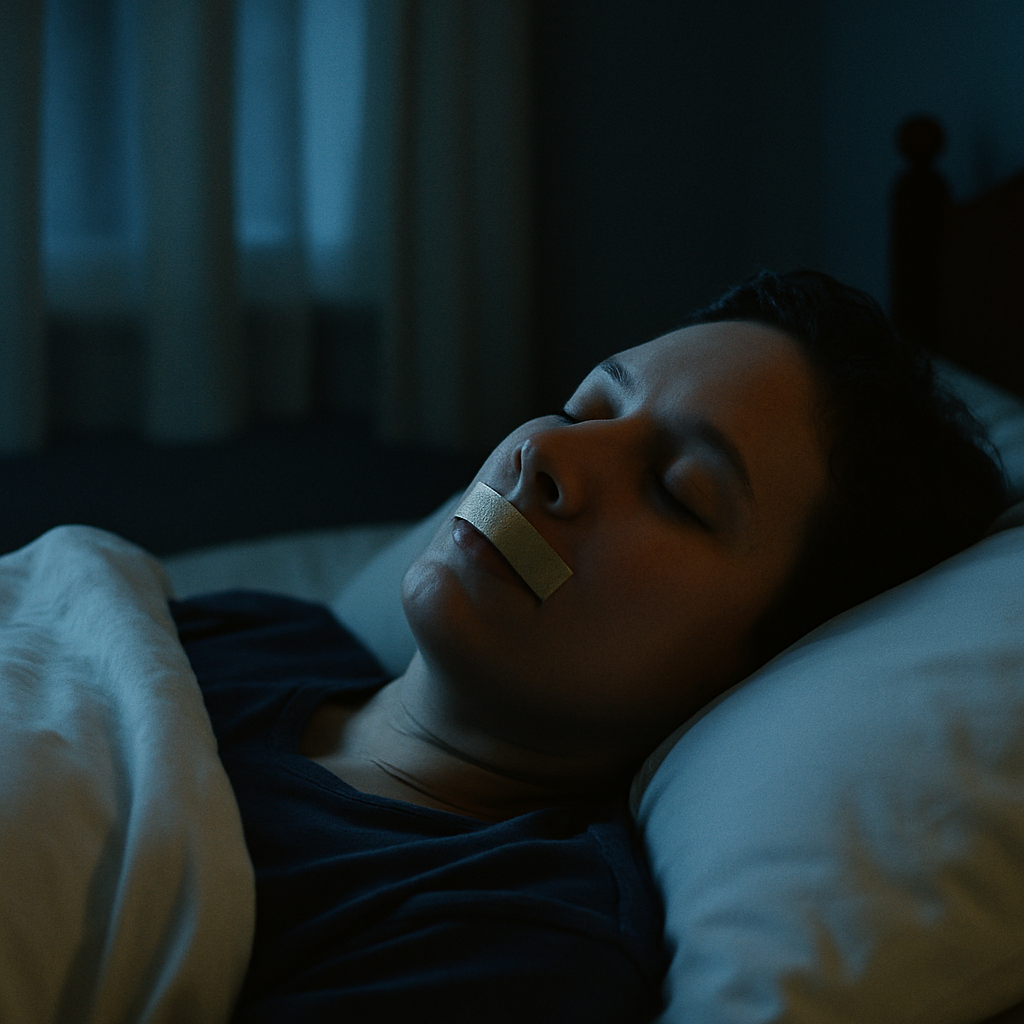
    Person lying asleep in bed with mouth tape applied, illustrating mouth taping for sleep
    Person lying asleep in bed with mouth tape applied, illustrating mouth taping for sleep

    What Are the Claimed Benefits of Mouth Taping?

    Proponents of mouth taping for sleep point to a handful of outcomes that have some grounding in physiology, even if the direct research is still thin. The most commonly cited benefits include reduced snoring, improved sleep quality, lower incidence of dry mouth in the morning, and better overnight oxygen saturation. Some people also report feeling calmer and less groggy upon waking, which they attribute to more consistent nasal breathing throughout the night.

    Snoring is often caused by the mouth falling open during sleep, allowing soft tissues in the throat to vibrate. Keeping the mouth closed can reduce that vibration in some cases. A small 2022 study published in the Journal of Clinical Sleep Medicine found that mouth taping with porous tape reduced the apnoea-hypopnoea index in participants with mild obstructive sleep apnoea by a modest but measurable amount. That is encouraging, but it is a small study, and mild sleep apnoea is very different from moderate or severe cases.

    On the dry mouth front, the evidence is more intuitive than clinical. If you regularly wake up with a parched mouth, cracked lips, or a sore throat despite being well-hydrated, mouth breathing is likely the culprit. Nasal breathing naturally maintains oral moisture overnight, and many people who try mouth taping do notice that particular complaint resolves fairly quickly.

    Is There Real Research Behind Mouth Taping?

    The honest answer is: not much yet. The published research is limited in sample size and scope. Most studies involve small cohorts, self-reported outcomes, and short observation periods. The NHS guidance on snoring does not currently recommend mouth taping as a treatment, focusing instead on lifestyle changes such as weight management, reducing alcohol intake, and adjusting sleep position. That does not mean mouth taping is without merit, but it does mean we should be cautious about treating social media success stories as evidence.

    What the research does support fairly clearly is that nasal breathing is preferable to mouth breathing for most people. That principle is well-established. The question is whether physically taping the mouth is a safe and effective way to achieve it, and that is where we need more rigorous data.

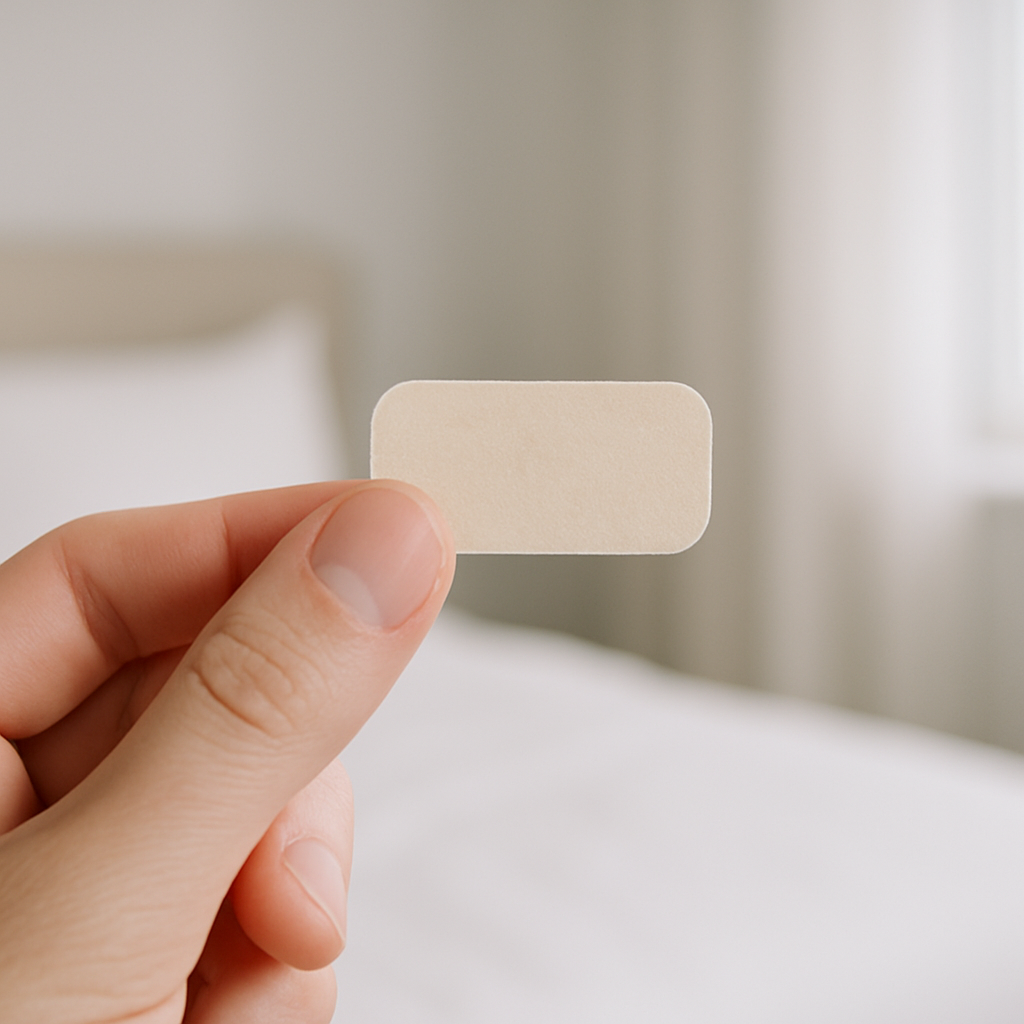
    Close-up of sleep tape product used in mouth taping for sleep routine
    Close-up of sleep tape product used in mouth taping for sleep routine

    What Are the Safety Risks?

    This is where the conversation needs to be taken seriously. Mouth taping is not universally safe, and skipping this section in favour of the lifestyle appeal would be irresponsible.

    The most significant risk involves people who have undiagnosed or untreated obstructive sleep apnoea (OSA). OSA is a condition where the airway partially or fully collapses during sleep. In these cases, the body often instinctively opens the mouth to compensate for blocked nasal passages. If you tape the mouth shut without knowing you have OSA, you may be restricting your only available airway during an apnoea episode. That is dangerous. According to the British Snoring and Sleep Apnoea Association, an estimated 1.5 million people in the UK have OSA, and a large proportion remain undiagnosed.

    Other risks include skin irritation and allergic reactions to adhesive tape, anxiety in those who feel claustrophobic, and the very real possibility of nausea at night where a blocked nose combined with a taped mouth could cause discomfort or, in rare cases, aspiration. If you have any nasal obstruction, whether from congestion, a deviated septum, polyps, or seasonal allergies, mouth taping could genuinely compromise your breathing during sleep.

    The type of tape matters too. Purpose-made sleep tape products such as SomniShop’s SomniFix strips or similar options use low-adhesive, skin-safe materials specifically designed not to fully seal the mouth. Standard stationery or packing tape is not appropriate and should never be used. Even with proper tape, some people find the sensation distressing enough that it wakes them, defeating the point entirely.

    Who Should Avoid Mouth Taping Entirely?

    There are clear groups for whom mouth taping for sleep is contraindicated. If any of the following apply to you, do not try this without speaking to a GP or sleep specialist first:

    • You have been diagnosed with, or suspect you have, obstructive sleep apnoea.
    • You have significant nasal congestion, polyps, or a structural blockage in your nasal passages.
    • You experience nausea or acid reflux at night, as taping can increase aspiration risk.
    • You have respiratory conditions such as asthma or COPD.
    • You take sedative medications that may affect your ability to react if you have trouble breathing during the night.
    • Children should not try mouth taping without explicit medical guidance.

    If you snore loudly, gasp during sleep, wake feeling unrefreshed regardless of how long you slept, or your partner notices you stop breathing, please see your GP before trying any sleep intervention. These can be signs of OSA, which needs proper assessment and management, not a strip of tape.

    How to Try It Safely If You Want To

    For otherwise healthy adults with no nasal obstruction and no sleep apnoea risk factors, mouth taping may be worth experimenting with. Start with purpose-made products rather than improvised alternatives. Apply the tape loosely across the centre of the lips rather than fully sealing the mouth from corner to corner. This allows some airflow if needed while still encouraging nasal breathing as the default.

    Try it for a week and pay attention to how you feel in the morning. Are you waking with a clearer head? Is the dry mouth better? Are you sleeping more soundly? Those subjective markers matter. If you feel more anxious at bedtime, sleep worse, or wake frequently, it is not the right tool for you, and that is perfectly fine.

    Sleep hygiene remains the more evidence-backed starting point for most people. Consistent sleep and wake times, a cool and dark bedroom, limiting alcohol and heavy meals close to bedtime, and managing stress will move the needle far more reliably than any single habit or product. Mouth taping might be a useful addition to that foundation for some people. For others, it may be unnecessary at best and risky at worst.

    Interestingly, the wellness space is full of trends that benefit from clear, credible communication, whether that is a sleep coach building an audience or a practitioner whose website design needs to convey trust and authority to clients searching for health support. Context and presentation shape how we receive information, in health as in everything else.

    The bottom line on mouth taping for sleep is this: the underlying principle, nasal breathing is better than mouth breathing, is sound. The method of achieving it by taping your lips shut carries real risks if applied without thought. Get screened for sleep apnoea if there is any doubt. Choose the right product. And approach it as one small experiment within a broader commitment to your sleep health, not as a shortcut or a cure.

    Frequently Asked Questions

    Does mouth taping actually stop snoring?

    For some people, yes. Snoring that is caused by the mouth falling open during sleep can be reduced by keeping the lips closed and encouraging nasal breathing. However, if your snoring is caused by obstructive sleep apnoea or structural issues in the airway, mouth taping will not address the root cause and may even be unsafe.

    What type of tape should I use for mouth taping at night?

    Only use purpose-made sleep tape products, such as SomniFix strips or similar low-adhesive, hypoallergenic options designed specifically for skin contact overnight. Never use stationery tape, gaffer tape, or any adhesive not designed for skin, as these can cause irritation, tearing, and may fully seal the mouth in an unsafe way.

    Can mouth taping be dangerous?

    Yes, in certain circumstances. The most serious risk applies to people with undiagnosed obstructive sleep apnoea, where taping the mouth shut can restrict the only available airway during an apnoea episode. It is also risky for those with nasal congestion, acid reflux, asthma, or COPD. Always consult your GP if you have any of these conditions before trying it.

    Is mouth taping safe for children?

    No. Children should not try mouth taping without explicit guidance from a paediatric sleep specialist or GP. Persistent mouth breathing in children can signal underlying issues including enlarged tonsils or adenoids, which require proper medical assessment rather than a behavioural workaround.

    How do I know if I have sleep apnoea before trying mouth taping?

    Common signs include loud snoring, waking gasping or choking, being told you stop breathing during sleep, and feeling unrefreshed despite a full night in bed. If any of these apply to you, see your GP before trying mouth taping. Your GP can refer you for a sleep study, which may be done at home using a monitoring device provided by an NHS sleep clinic.

  • How to Beat Desk Fatigue: Movement, Stretching and Workstation Tips for Home Workers

    How to Beat Desk Fatigue: Movement, Stretching and Workstation Tips for Home Workers

    If you spend the majority of your working day seated, desk fatigue is likely something you know all too well – that creeping stiffness in your neck, the dull ache across your lower back, and the heavy tiredness that settles in by mid-afternoon. For the millions of people working from home or in office environments, prolonged sitting has quietly become one of the most significant threats to everyday wellbeing.

    What Prolonged Sitting Does to Your Body

    The human body was not designed to stay still for hours at a time. When you sit for extended periods, the muscles that support your spine – particularly those in the hips, glutes, and core – gradually switch off. This forces other structures, like the neck and lower back, to compensate, leading to postural strain and discomfort. Poor circulation is another consequence, contributing directly to that foggy, low-energy feeling that many desk workers experience by mid-morning. Desk fatigue is not just about tiredness; it is a physical response to a body that has been static for too long.

    Movement Snacks: Small Breaks, Big Benefits

    One of the most effective strategies for combating desk fatigue is introducing what are often called “movement snacks” – short bursts of gentle activity woven into your working day. You do not need a gym or any special equipment. The aim is simply to break up long periods of sitting every 30 to 45 minutes.

    Try these quick movement snacks between tasks:

    • Standing calf raises – rise up onto your toes 10 to 15 times while making a cup of tea.
    • Shoulder rolls – roll both shoulders backwards in slow, deliberate circles to release upper back tension.
    • Standing hip flexor stretch – step one foot forward into a gentle lunge position and hold for 20 seconds each side.
    • Neck tilts – slowly tilt your ear towards your shoulder and hold for 10 seconds to release neck tightness.

    These micro-breaks are powerful precisely because they are so accessible. Setting a quiet timer on your phone or using a simple app reminder makes it easy to build the habit gradually.

    A Simple Desk Stretching Routine

    Beyond movement snacks, a more structured stretching routine once or twice a day can significantly reduce the physical effects of desk fatigue. Focus on the areas most affected by sitting: the chest, hip flexors, hamstrings, and thoracic spine.

    A five-minute routine could include a seated spinal twist (gently rotate your torso while seated), a chest opener (clasp your hands behind your back and gently lift), and a seated forward fold (hinge at the hips over your legs to lengthen the hamstrings). None of these require you to leave your desk area.

    Workstation Tweaks That Make a Real Difference

    Physical movement matters most, but your workstation setup plays a supporting role in preventing desk fatigue from taking hold in the first place. A few straightforward adjustments can ease the load on your body throughout the day.

    • Monitor height – your screen should sit at roughly eye level to keep your neck in a neutral position. A stack of books works just as well as a monitor stand.
    • Chair support – ensure your lower back is supported and your feet rest flat on the floor. A rolled-up towel placed behind your lumbar spine can make a noticeable difference if you do not have an ergonomic chair.
    • Keyboard and mouse position – keep them close enough that your elbows remain at roughly 90 degrees, reducing shoulder and wrist strain.
    • Lighting – position your screen to avoid glare, which causes eye strain and unconscious head tilting that feeds into neck tension.

    Building a Healthier Work Day from Your Baseline

    Tackling desk fatigue does not demand a complete overhaul of your routine. Starting with one or two movement snacks each day, pairing them with a short stretching habit, and making simple adjustments to your workspace adds up to a meaningful shift in how you feel. Your body responds quickly to even modest changes – and the energy, focus, and comfort you gain are well worth the small effort it takes to start.

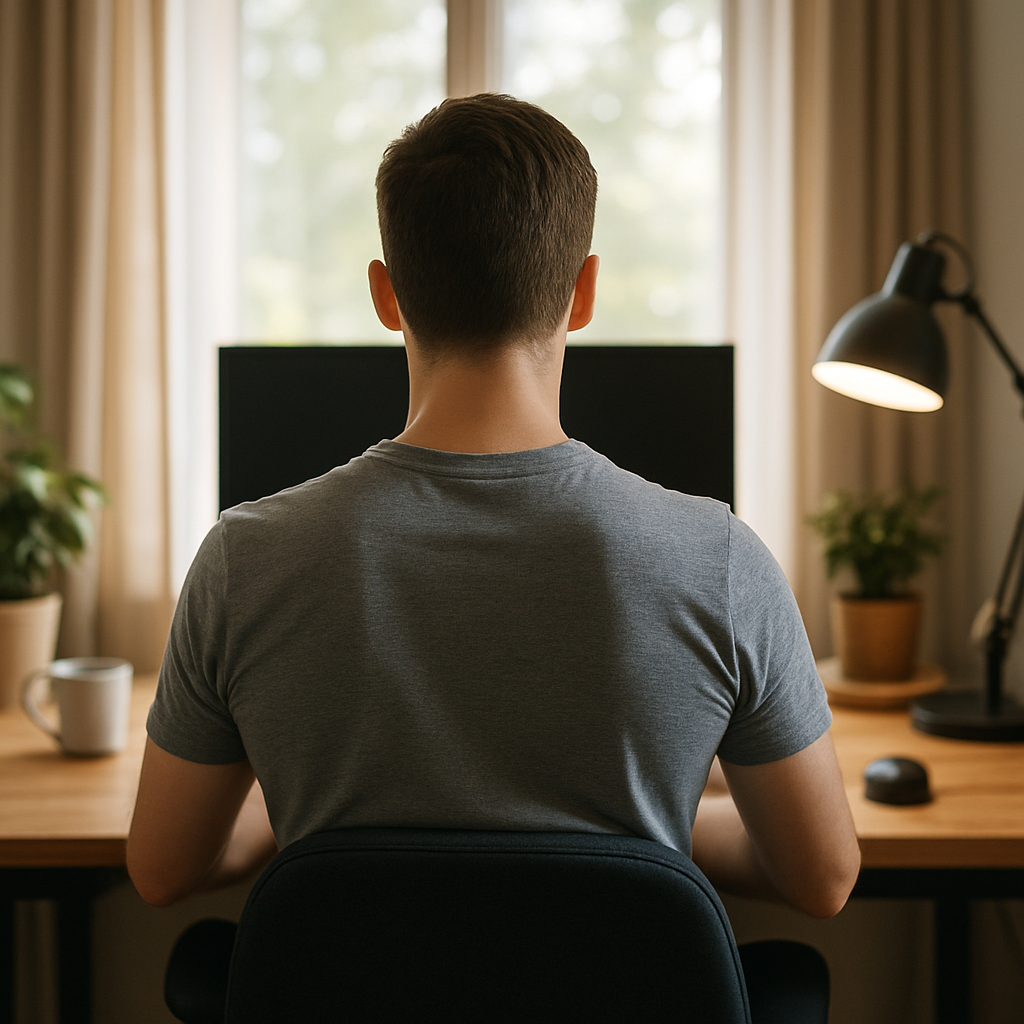
    Person doing a simple shoulder stretch beside their desk to relieve desk fatigue
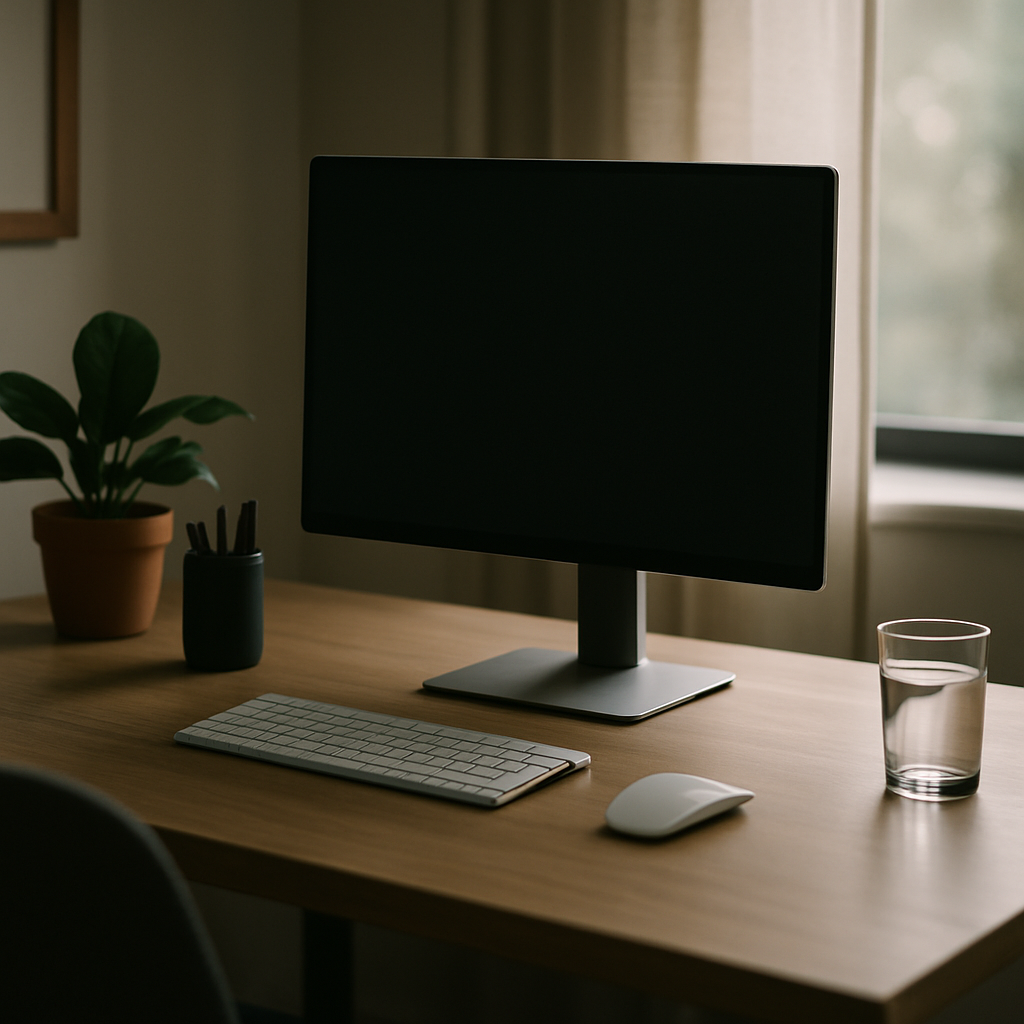
    Well-organised ergonomic home office workstation set up to help reduce desk fatigue

    Desk fatigue FAQs

    How often should I take breaks to prevent desk fatigue?

    Aim to stand up or move around every 30 to 45 minutes. Even a brief two-minute movement snack – such as shoulder rolls or a short walk to another room – is enough to interrupt the physical effects of prolonged sitting and help reduce desk fatigue over the course of the day.

    Can desk fatigue cause long-term health problems?

    Persistent desk fatigue, if left unaddressed, can contribute to chronic back and neck pain, reduced mobility, and poor circulation over time. Building regular movement and stretching into your daily routine is a straightforward and effective way to protect your musculoskeletal health in the long term.

    Do I need special equipment to improve my workstation setup?

    Not at all. Many effective workstation tweaks require no specialist equipment. Stacking books to raise your monitor, rolling a towel for lumbar support, and adjusting your chair height with a cushion are all low-cost solutions that can meaningfully reduce the strain contributing to desk fatigue.

  • How Sound and Music Affect Your Mental Wellbeing

    How Sound and Music Affect Your Mental Wellbeing

    The relationship between music and mental wellbeing is something scientists and therapists have explored for decades – and what they keep finding is remarkable. Sound has a profound ability to shift our mood, reduce stress hormones, aid concentration, and even ease physical pain. If you have ever felt instantly calmer when a favourite song comes on, or energised by a powerful beat, you have already experienced this connection firsthand.

    Why Music Has Such a Powerful Effect on the Mind

    When you listen to music, your brain releases dopamine – the same feel-good neurotransmitter linked to pleasure and reward. This is not just a casual observation; studies using brain imaging have confirmed that music activates multiple regions of the brain simultaneously, including areas associated with emotion, memory, and movement. The result is a full-spectrum mental experience that few other activities can match.

    The tempo and tone of music matters enormously. Slow, melodic pieces tend to lower heart rate and blood pressure, encouraging a parasympathetic response – in other words, a genuine physiological calm. Upbeat or rhythmic tracks, on the other hand, can prime your nervous system for action and motivation. This is why so many people use playlists to power through a morning run or a difficult work task.

    Music and Mental Wellbeing: Everyday Applications

    You do not need to be a musician or a devoted audiophile to benefit. Integrating sound more intentionally into your daily routine can have a measurable impact on how you feel throughout the day. Here are some practical ways to start:

    • Morning rituals: Beginning your day with uplifting or calming music sets a positive tone before the noise of daily life takes over. Even ten minutes with headphones or a quality speaker can shift your baseline mood significantly.
    • Focus and productivity: Instrumental music or ambient soundscapes are particularly effective for concentration. The absence of lyrics removes a source of cognitive distraction while still stimulating the brain.
    • Wind-down and sleep: Gentle, low-tempo music signals to your body that it is time to rest. Many sleep researchers recommend listening to slow-paced music for around 45 minutes before bed to reduce cortisol levels.
    • Emotional processing: Sometimes choosing music that reflects how you already feel – rather than how you want to feel – can help you process difficult emotions rather than suppress them.

    The Role of Passive Listening in Daily Life

    Not all beneficial sound exposure needs to be intentional. Background radio, for example, provides a gentle layer of audio that can combat loneliness, reduce anxiety in quiet environments, and maintain a sense of connection to the wider world. Many people find that having a DAB radio on in the background during household chores or while cooking creates a more relaxed and enjoyable atmosphere without requiring active attention.

    The quality of the listening experience also plays a role. Poor audio quality can introduce subtle irritation, while clear, warm sound is genuinely more soothing. Investing in even modestly better speakers or headphones is worth considering if you use music regularly as a wellbeing tool.

    When Sound Becomes Stress

    It is worth acknowledging that not all sound exposure is beneficial. Noise pollution – whether from traffic, building works, or loud environments – has been linked to raised blood pressure, disrupted sleep, and increased anxiety. Being mindful about the sounds around you is just as important as choosing the right music. Noise-cancelling headphones, soft furnishings that absorb sound, and designated quiet times in your home all contribute to a healthier audio environment.

    Building a Healthier Relationship With Sound

    Approaching music and mental wellbeing with intention does not require dramatic changes. Start small – curate a playlist for your morning, swap scrolling for a calming podcast before bed, or simply notice how different types of sound make you feel. Over time, these small adjustments build a richer, more supportive daily experience. Your baseline starts with how you feel right now – and sound is one of the most accessible tools available to help you raise it.

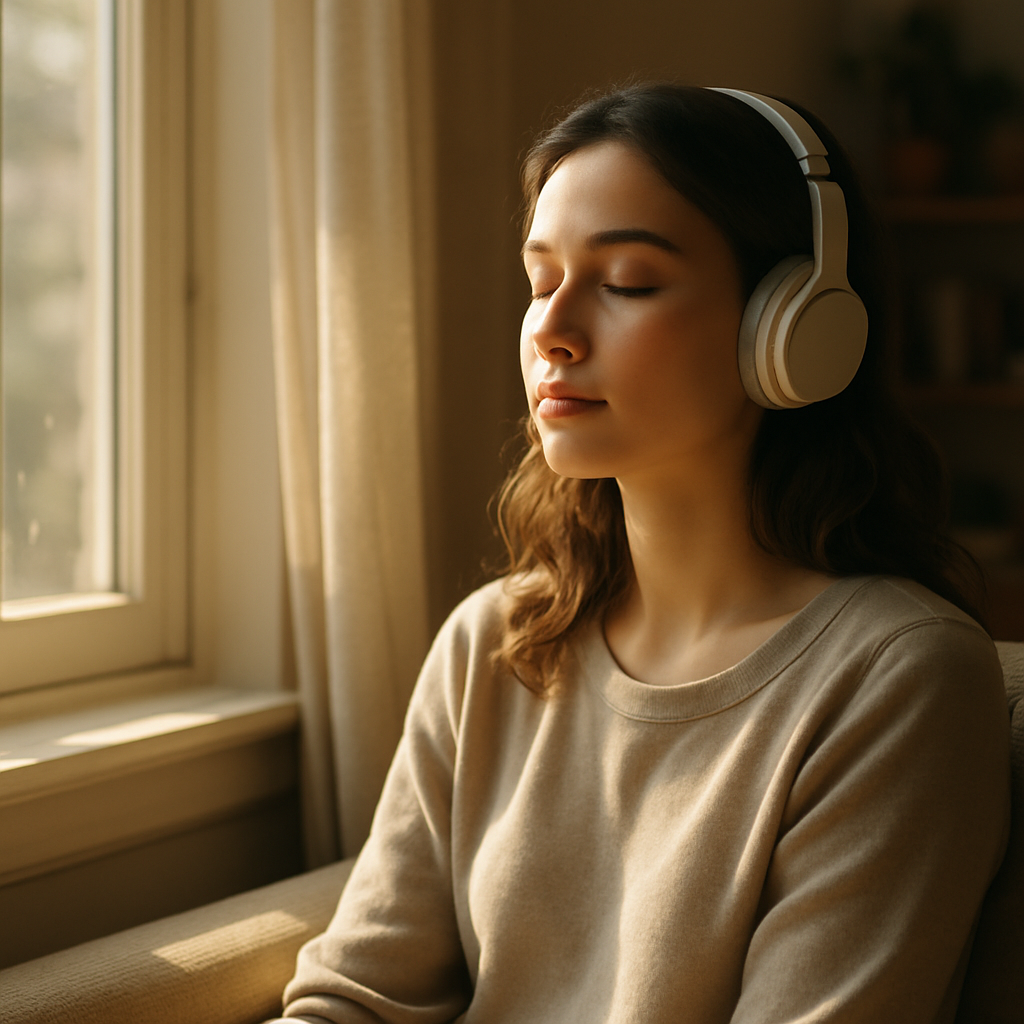
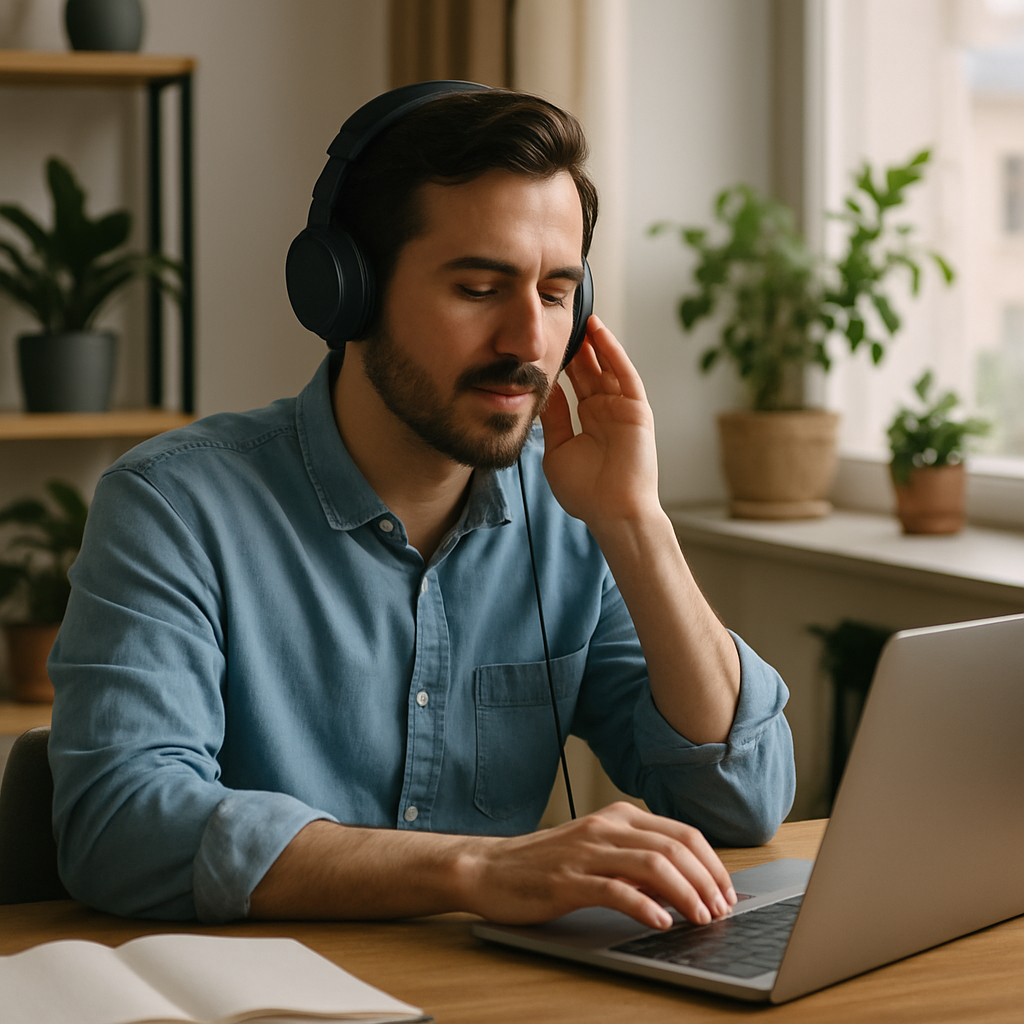
    Man using music for focus and concentration showing music and mental wellbeing benefits
    Friends enjoying outdoor music together reflecting the positive impact of music and mental wellbeing

    Music and mental wellbeing FAQs

    Can listening to music really reduce stress and anxiety?

    Yes – research consistently shows that listening to certain types of music lowers cortisol levels, slows the heart rate, and activates the brain’s reward pathways. Even short listening sessions of 10 to 20 minutes can produce a measurable reduction in stress markers, making it one of the most accessible self-care tools available.

    What kind of music is best for mental wellbeing?

    It depends on your goal. For relaxation, slow-tempo instrumental music or natural soundscapes work well. For focus and productivity, ambient or classical music without lyrics tends to support concentration. For mood-lifting, upbeat tracks you personally enjoy tend to be most effective – familiarity and personal connection are key factors.

    How does music and mental wellbeing connect for people with depression?

    Music therapy is increasingly used alongside traditional treatments for depression, with promising results. Music can stimulate dopamine release, reduce feelings of isolation, and provide an emotional outlet. While it is not a replacement for professional mental health support, incorporating music mindfully into daily life can be a valuable part of a broader wellbeing strategy.

  • Digital wellbeing: finding a healthy baseline in a hyperconnected world

    Digital wellbeing: finding a healthy baseline in a hyperconnected world

    Digital wellbeing is no longer a niche idea. For many of us, screens are the first thing we see in the morning and the last thing we check at night. If you want to start your day at your baseline – calm, clear and centred – it helps to get intentional about how you use your devices.

    What is digital wellbeing and why does it matter?

    At its simplest, digital wellbeing is about having a healthy relationship with technology so it supports your life instead of draining it. It is not anti-tech. It is pro-boundaries.

    Too much unstructured screen time is linked with poorer sleep, higher stress and difficulty focusing. Constant notifications keep your nervous system on alert, making it harder to relax. Over time, this can chip away at mood, productivity and even physical health through inactivity and eye strain.

    Looking after your digital wellbeing means noticing how technology makes you feel, then adjusting your habits so you feel more grounded, rather than overstimulated.

    Morning routines that protect your digital wellbeing

    How you start your day sets the tone for everything that follows. If your phone is your alarm, it is easy to fall straight into emails, news or social media before you have even got out of bed.

    Try these simple shifts to create a calmer morning baseline:

    • Use a basic alarm clock so your phone can stay outside the bedroom.
    • Commit to 15 to 30 minutes phone free after waking – use that time for stretching, a glass of water, or a short walk.
    • Turn off non-essential notifications overnight so you are not greeted by a wall of alerts.
    • Keep your home screen clear of distracting apps and place only essentials where you can see them.

    These small boundaries help your brain wake up gradually, rather than being hit with a rush of information and comparison.

    Managing information overload for better digital wellbeing

    One of the biggest strains on digital wellbeing is sheer volume – of messages, content and choices. To protect your mental space, treat your attention as something precious.

    Consider:

    • Batch checking emails and messages at set times instead of constantly dipping in.
    • Unsubscribing from newsletters and muting group chats that no longer serve you.
    • Using “do not disturb” modes during focused work, meals and conversations.
    • Setting time limits for the apps you tend to scroll on without thinking.

    Even tech focused companies like dijitul are increasingly talking about balance, recognising that long term performance relies on healthy, rested people, not constant online availability.

    Social media, comparison and your baseline

    Social platforms can connect, inspire and educate. They can also fuel comparison, anxiety and low mood. Your these solutions depends less on being online and more on how and why you are there.

    Ask yourself regularly:

    • How do I feel after using this app – energised, informed, flat or agitated?
    • Am I choosing to open it, or tapping it out of habit or boredom?
    • Whose content lifts me up, and whose leaves me tense or inadequate?

    Unfollow accounts that spike stress or self criticism, even if everyone else seems to follow them. Curate a feed that reflects your values, not your fears. Your baseline should feel like you, not like someone else you are trying to keep up with.

    Sleep, screens and evening wind down

    Good sleep is one of the strongest foundations for wellbeing, yet late night scrolling is a common sleep disruptor. Blue light can interfere with your body clock, while stimulating content keeps your mind active when it should be slowing down.

    To protect your evening these solutions:

    • Set a digital sunset, ideally 60 minutes before bed, where you step away from phones, laptops and tablets.
    • Use warmer screen settings or night modes from early evening if you must be online.
    • Create a wind down routine: reading a book, gentle stretching, journalling or a warm bath.
    • Charge devices outside the bedroom so you are not tempted to scroll if you wake in the night.

    Think of this as giving your brain a chance to land, so you can wake closer to your natural baseline the next morning.

    Woman setting boundaries with her phone as part of digital wellbeing
    Man taking a screen break outdoors to improve digital wellbeing

    Digital wellbeing FAQs

    What does digital wellbeing actually involve day to day?

    Day to day, digital wellbeing means using your devices in a way that supports your health instead of undermining it. That might look like setting clear times to check messages, limiting social media scrolling, turning off non-essential notifications, protecting your sleep from late night screen use and choosing online content that leaves you feeling informed or inspired instead of tense or drained.

    How can I improve my digital wellbeing without quitting social media?

    You do not need to quit social media to improve your digital wellbeing. Start by unfollowing accounts that trigger comparison or anxiety, muting noisy group chats, and setting daily time limits for the apps you use most. Build in screen free pockets such as during meals, the first half hour after waking and the hour before bed. Focus on using social platforms intentionally, for connection or learning, rather than as a default distraction.

    Can better digital wellbeing really help my sleep and stress levels?

    Yes. Constant notifications and late night scrolling keep your nervous system activated and can disrupt your body clock, both of which make it harder to fall and stay asleep. By setting boundaries around evening screen use, reducing information overload and giving yourself tech free wind down time, you are more likely to sleep deeply and wake feeling closer to your natural baseline, which in turn can lower everyday stress.

  • How To Stop Doomscrolling: Creating A Healthy Information Diet

    How To Stop Doomscrolling: Creating A Healthy Information Diet

    If you wake up and reach for your phone before you even get out of bed, you are not alone. Many of us want to know how to stop doomscrolling, yet we feel pulled towards the next alarming headline or breaking story. It can feel like staying informed, but your body often tells a different story.

    How doomscrolling affects your nervous system

    Our brains are wired to scan for threats. The 24/7 news cycle takes advantage of this by serving a constant stream of danger, conflict and outrage. Each shocking headline triggers a mini stress response. Your body releases adrenaline and cortisol, your heart rate may rise, and your muscles subtly tense as if you need to act.

    When this happens repeatedly throughout the day, your nervous system can get stuck in a state of hyper-alertness. You might feel jumpy, irritable or on edge without knowing why. Over time, this constant low-level stress can contribute to headaches, digestive issues, muscle tension and a general sense of unease.

    Doomscrolling also keeps your attention fragmented. Rapidly switching between stories and platforms makes it harder for your brain to process information properly, so worries linger and feel bigger than they are.

    How doomscrolling disrupts sleep and mood

    Late-night scrolling exposes your eyes to bright blue light, which suppresses melatonin, the hormone that tells your body it is time to sleep. At the same time, upsetting news spikes your stress hormones. Your body ends up getting mixed messages: stay awake and stay alert, even when you are in bed.

    This combination makes it harder to fall asleep and stay asleep. You might notice racing thoughts, replaying stories you have read, or waking in the night to check your phone. Poor sleep then feeds into low mood, anxiety and difficulty concentrating the next day.

    Emotionally, constant exposure to distressing news can lead to a sense of helplessness. You may feel that the world is only getting worse, even though positive stories rarely receive the same attention. This negativity bias can increase symptoms of anxiety and depression and make everyday stresses feel heavier.

    Why doomscrolling feels addictive

    Understanding how to stop doomscrolling starts with knowing why it is so hard to put the phone down. Each time you refresh your feed, you get a new hit of information. Sometimes it is shocking, sometimes mildly interesting, occasionally uplifting. This unpredictable mix keeps your brain hooked, releasing dopamine in anticipation of the next piece of content.

    There is also a powerful social element. Many people worry that if they unplug, they will miss something important or seem uninformed. In uncertain times, checking the news can feel like a way to stay in control, even if it actually leaves you feeling more overwhelmed.

    How to stop doomscrolling with a healthy information diet

    Think of your news intake like your food intake: you need enough to stay nourished, but too much of the wrong thing leaves you feeling unwell. Here is a simple framework to create a healthier information diet.

    1. Set clear “news windows”

    Choose one or two short times in the day to catch up on news, such as mid-morning and early evening. Outside those windows, avoid news apps and social feeds. This limits the constant drip of stress while still keeping you informed.

    2. Protect your mornings and evenings

    Make a rule that you will not check news for the first 30 to 60 minutes after waking and the last hour before bed. Use that time for grounding habits instead: stretching, a short walk, a proper breakfast or a few minutes of slow breathing. These moments help you start and end the day at your baseline, rather than in a state of alarm.

    3. Tidy up your notifications

    Turn off breaking news alerts and limit notifications from social media. If that feels like too much, start by muting them overnight. Reducing interruptions gives your nervous system a chance to relax and makes it easier to stay present with whatever you are doing.

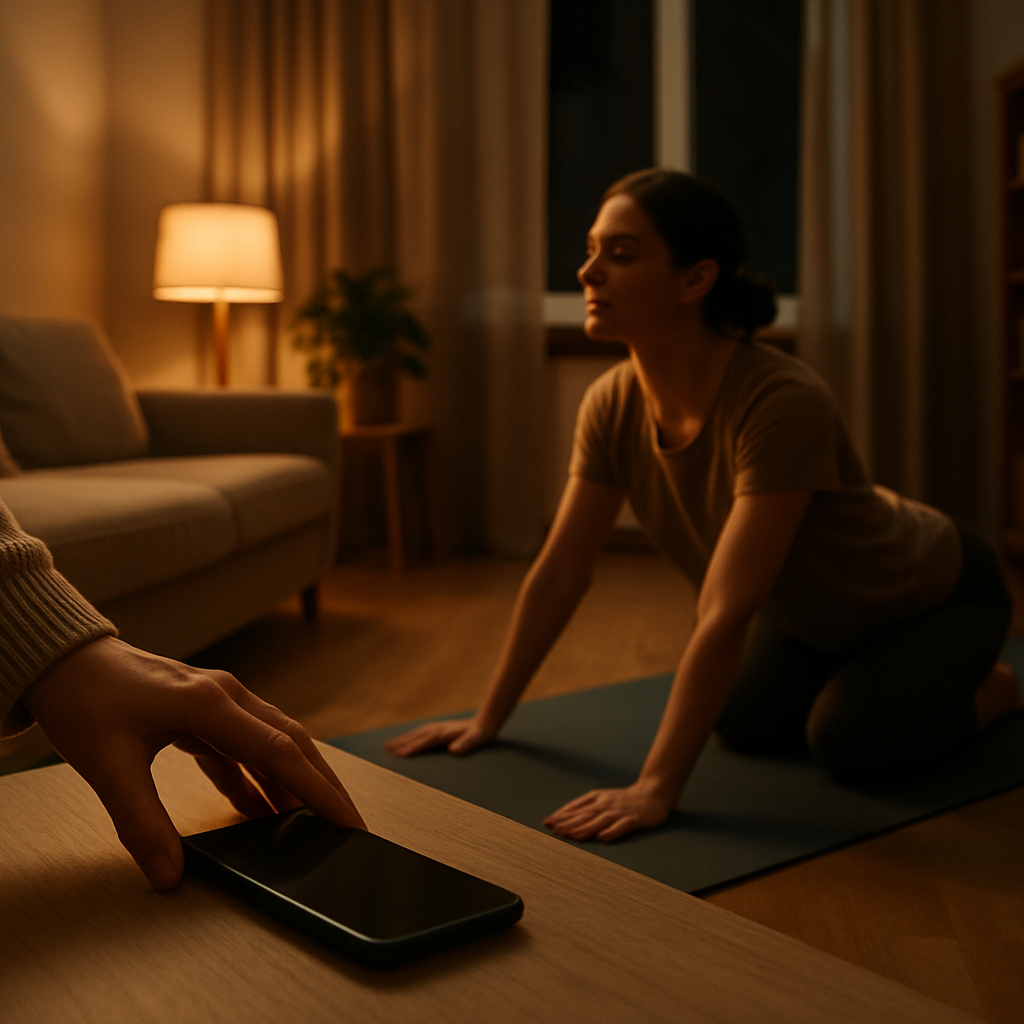
    Relaxed person putting their phone away and stretching in a cosy living room as part of a routine for how to stop doomscrolling.
    Person walking in a peaceful park at sunrise with their phone away, showing a mindful strategy for how to stop doomscrolling.

    How to stop doomscrolling FAQs

    Why is it so hard to stop doomscrolling once I start?

    Doomscrolling taps into your brain’s threat and reward systems. Each refresh offers new information, sometimes alarming, sometimes mildly interesting. This unpredictable mix releases dopamine and keeps you searching for the next update. On top of that, worrying headlines trigger your stress response, so you feel compelled to keep checking for reassurance. Setting time limits, removing autoplay and turning off push alerts can break this cycle and make it easier to put your phone down.

    Can doomscrolling really affect my physical health?

    Yes. Repeated exposure to distressing news can keep your body in a state of low-level stress. Stress hormones such as cortisol and adrenaline stay elevated, which over time can contribute to headaches, muscle tension, digestive issues, raised blood pressure and weakened immunity. It can also disrupt sleep, which affects energy, appetite and mood. Reducing your news intake, especially in the evening, and adding calming routines can help your body return to a healthier baseline.

    How can I stay informed without feeling overwhelmed?

    Decide what “informed” means for you and build simple boundaries around it. You might choose one or two short news windows per day, follow a limited number of trusted sources and use a daily summary rather than live feeds. Avoid checking news first thing in the morning or last thing at night, and pay attention to how your body feels as you read. If you notice rising tension or anxiety, pause, take a few slow breaths and step away. This way, you stay connected to the world while still protecting your wellbeing.

  • How Biophilic Home Design Can Boost Your Everyday Wellbeing

    How Biophilic Home Design Can Boost Your Everyday Wellbeing

    Biophilic home design for wellbeing is all about bringing the calming power of nature into the spaces where you spend most of your time. When your home supports your body and mind, it becomes easier to start each day at your baseline – balanced, rested and ready.

    What is biophilic home design for wellbeing?

    Biophilic design is based on our innate need to connect with nature. Instead of treating your home as a sealed box, it weaves in natural light, fresh air, greenery and organic materials to create a soothing, supportive environment. When this approach is used thoughtfully, biophilic home design for wellbeing can reduce stress, support better sleep and even improve focus.

    This does not mean filling every corner with plants. It is about creating a subtle, steady sense of nature: the warmth of wood under your feet, a view of the sky from your favourite chair, or the sound of rain on glass while you stay cosy indoors.

    Natural light and views: your daily reset

    Light is one of the strongest signals for your body clock. A home that lets in plenty of daylight helps regulate sleep hormones, so you feel naturally more alert in the morning and more ready to rest at night. Aim to spend your first waking minutes in a room with generous windows or doors that open onto the outdoors.

    If you are planning any upgrades, think about how you can increase light and views. Larger windows, rooflights and glazed structures such as conservatories can all help, but even small steps make a difference. Rearranging furniture to face a window, pulling back heavy curtains, or swapping dark blinds for lighter ones can gently lift your baseline mood each day.

    Bringing nature inside with materials and textures

    Biophilic home design for wellbeing also focuses on what you touch and see up close. Natural materials tend to feel warmer and more grounding than plastics and laminates. Consider:

    • Wooden floors, shelves or side tables that show the grain
    • Natural fabrics like cotton, linen or wool for bedding and throws
    • Stone, clay or ceramic finishes in kitchens and bathrooms

    These textures create a sense of calm continuity with the outdoors. Even if a full renovation is not on the cards, small swaps – a wooden lamp base, a woven rug, a linen cushion cover – can nudge your space towards a more natural feel.

    Plants, air quality and your baseline energy

    Indoor plants are a simple, affordable way to shift the atmosphere of a room. They soften hard edges, add gentle colour and can help you feel more connected to the seasons. Choose low maintenance varieties if you are new to plant care, such as snake plants, pothos or peace lilies.

    Place plants where you spend time rather than just in corners: on your desk, beside your bed or near the dining table. This keeps nature within your everyday line of sight, which research suggests can lower stress levels and support more stable energy across the day.

    Good air quality is just as important. Regularly opening windows, even for a few minutes, helps clear indoor pollutants and brings in fresh oxygen. Pair this with plants and you create a gentle, natural breathing space that supports your lungs and your nervous system.

    Designing calming routines into your space

    The most powerful biophilic homes do more than look good – they support daily rituals that keep you at your baseline. Try creating:

    • A morning light spot: a chair by the window where you drink water or stretch in daylight
    • A green work zone: a desk with at least one plant, a view outside and minimal clutter
    • A wind-down corner: soft lighting, natural textures and a clear view of the sky or garden

    Think of your home as a partner in your wellbeing. Each small design choice can make it easier to choose rest over scrolling, a glass of water over another coffee, or a few minutes of stretching over collapsing onto the sofa.

    Calming bedroom showing biophilic home design for wellbeing with soft textures and greenery
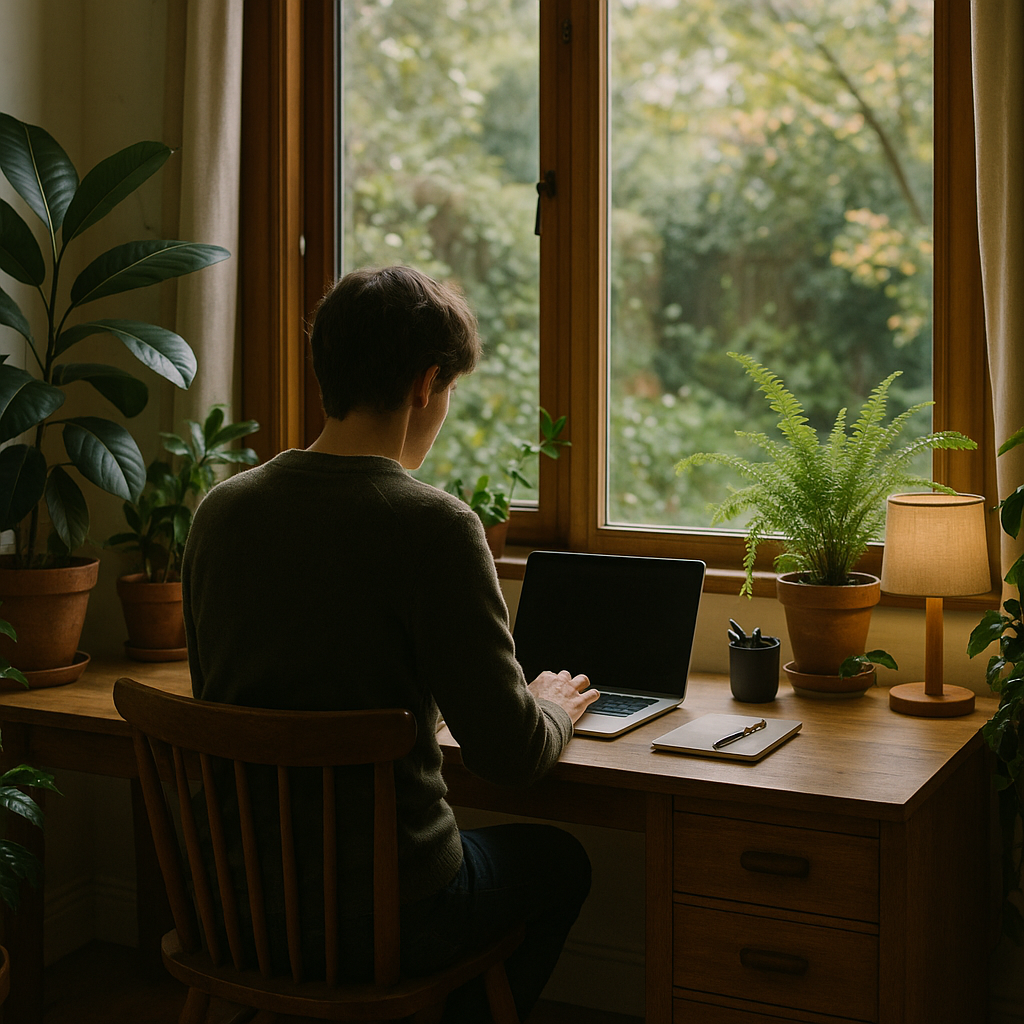
    Home workspace arranged with biophilic home design for wellbeing including plants and garden view

    Biophilic home design for wellbeing FAQs

    Is biophilic home design for wellbeing expensive to implement?

    It does not have to be. While large windows and major structural changes can be costly, many elements of biophilic home design for wellbeing are inexpensive. Opening curtains fully, rearranging furniture to face natural light, adding a few houseplants, choosing natural fabrics for cushions or bedding and regularly airing rooms are all low cost steps that still support your body and mind.

    How can I use biophilic home design for wellbeing in a small flat?

    In a small flat, focus on what you can see, touch and smell each day. Place plants on window sills and shelves, use light coloured curtains to maximise daylight, and choose natural textures like cotton, wood and woven baskets. Even a single window with a view of the sky, a small herb pot in the kitchen and a cosy, nature inspired reading corner can bring the benefits of biophilic home design for wellbeing into compact spaces.

    Can biophilic home design for wellbeing help with sleep problems?

    It can support healthier sleep patterns by working with your body clock. Exposure to natural light in the morning helps regulate melatonin, while a darker, calmer bedroom in the evening signals to your brain that it is time to rest. Using biophilic home design for wellbeing, you might prioritise daylight in your morning spaces, choose soft, natural bedding, reduce clutter and include a small plant or two to create a soothing, sleep friendly environment.