
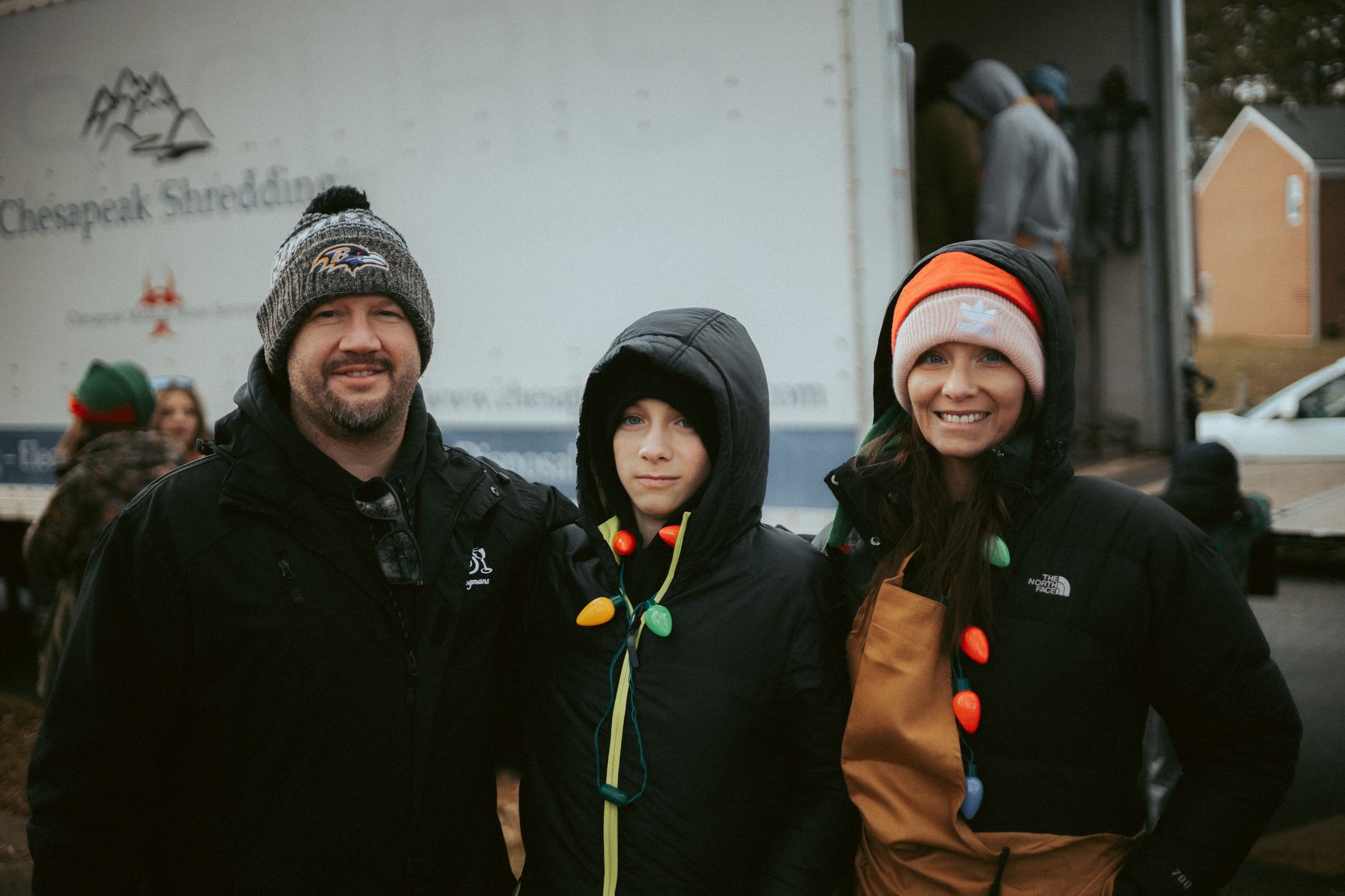
Most people associate January with resolutions they quietly abandon by the second week, and December with the particular exhaustion of trying to enjoy themselves on cue. What fewer people talk about is a quieter, more reliable route through winter that doesn’t require willpower or a gym membership. Volunteering at community events, stewarding a charity parade, helping organise a local winter lights switch-on, running a collection point for a food bank, turns out to be one of the more evidence-backed things you can do for your mental health during the darker months. I’ve seen this in practice, and the science behind it is more solid than you might expect.
What winter actually does to your mood
It’s worth being clear about what we’re dealing with. The NHS estimates that around 2 million people in the UK experience seasonal affective disorder, with a broader group experiencing subclinical winter low mood that doesn’t quite meet diagnostic criteria but still affects energy, motivation, and social connection. Reduced daylight suppresses serotonin production and disrupts melatonin rhythms, and the natural response for many people is to withdraw socially, work from home more, and spend evenings on the sofa. Understandable. Also, unfortunately, exactly the wrong prescription.
Withdrawal feeds the problem. Loneliness in the UK carries real physiological consequences, from elevated cortisol to disrupted sleep and weakened immune response. The reflex to stay in when it’s cold and grey can tip a manageable dip into something harder to climb out of. Volunteering, particularly in person and outdoors, cuts directly against that reflex in a way that’s surprisingly hard to replicate through screens.
The psychological mechanisms that make volunteering work
There are three distinct things happening psychologically when you volunteer regularly, and each one matters independently.
The first is purpose. A clear task with a visible outcome, setting up barriers along a festive route, packing hampers for elderly residents, marshalling a charity float, gives you something concrete to do at a time of year when many people feel vaguely unmoored. Research published in the journal BMC Public Health found that volunteers reported significantly higher scores for meaning and life satisfaction than matched non-volunteers, with the effect most pronounced during periods of social stress.
The second is belonging. Community event volunteering specifically puts you in proximity to other people who are also choosing to give their time. There’s an immediate social shortcut in that shared context, you don’t have to work hard to find common ground, because you’re already standing in it. For people who feel isolated in winter, this low-stakes social contact can be the thing that keeps them tethered to their wider community.
The third is cold-weather outdoor activity itself. I know that sounds counterintuitive, but there’s decent evidence that time outdoors in winter, even in overcast British weather, provides more light exposure than sitting near a window indoors. The NHS recommends getting outside in natural daylight as a first-line approach for mild seasonal low mood, and outdoor volunteering delivers this almost as a side effect. You’re not choosing to go for a walk in the grey drizzle through willpower alone, you’re there because something needs doing, which removes the activation energy problem entirely.

What winter community volunteering actually looks like in the UK
Across the UK, December and January are busier for volunteer-run events than most people realise. Christmas light events, charity fun runs, food bank collections, winter warmth hubs, carol concert stewarding, local councils and charities are consistently short of hands. In 2024, the Trussell Trust reported a record number of food parcels distributed in the run-up to Christmas, and the infrastructure behind that depends almost entirely on volunteers.
Getting involved doesn’t require prior experience or a major commitment. Most organisations are grateful for a single morning. You might find yourself outdoors, helping erect signage or manage crowd barriers, the practical, physical side of community events that rarely gets glamourised but is genuinely satisfying when you step back and see what’s been built. If you’re involved in setting up any external structures, whether that’s temporary staging, festive decorations on timber frames, or anything fixed to masonry in wet winter weather, it’s worth knowing your materials. The physical demands are real, and doing it safely matters: further reading: galvanised vs stainless steel fixings: which should uk builders be specifying for external timber and masonry?
Local volunteer centres, find yours through Do IT, a well-established UK volunteering platform, typically list seasonal opportunities from October onwards. Many councils also have their own volunteer portals linked through their main websites.
How much volunteering is enough to make a difference?
The research here is more nuanced than the headline numbers suggest. A growing body of evidence on social isolation suggests that quality of connection matters more than frequency, but for volunteering specifically, even infrequent involvement carries measurable benefit. A University of Exeter study found that older adults who volunteered even once a month reported lower rates of depression and better self-rated health than those who didn’t volunteer at all.
The sweet spot, based on available evidence, seems to be around two to four hours per week during high-need periods. That’s a manageable ask for most people with regular jobs and families. And critically, the benefit compounds: the social connections made during December volunteering often persist into January and February, exactly when the post-Christmas dip tends to land hardest.
I’d also push back gently on the idea that volunteering is selfless in a way that makes it feel like sacrifice. Most regular volunteers will tell you they get more out of it than they put in. That’s not a contradiction, it’s the whole mechanism working as designed.
What to keep in mind before you sign up
A few practical things worth noting. If you’re already dealing with moderate or severe depression rather than winter low mood, volunteering alone isn’t a substitute for professional support, speak to your GP first. The NHS has self-referral routes for talking therapies in most areas of England through the IAPT (now NHS Talking Therapies) programme.
If you’re managing energy carefully, due to a chronic condition, for example, choose indoor volunteering roles initially. Packing donations in a warm warehouse is just as valuable socially as outdoor event stewarding, and the psychological benefits are broadly comparable.
And if the thought of committing to something regular feels like too much right now, that’s fine. A one-off afternoon is still worthwhile. The research on the knock-on effects of circadian disruption in winter suggests that even a single outdoor afternoon shifts your light exposure in a meaningful way. Pair that with genuine human contact and a task that matters, and you’ve got a fairly compelling case for at least giving it one try before writing the idea off.
Winter doesn’t have to be something you endure. Sometimes the best prescription is being somewhere you’re needed.
Frequently Asked Questions
Does volunteering actually improve mental health in winter?
Yes, and the evidence is reasonably consistent. Studies including work from the University of Exeter found volunteers report lower rates of depression and higher wellbeing scores than matched non-volunteers. Outdoor volunteering in winter also increases natural light exposure, which directly supports serotonin production and helps regulate mood.
How do I find winter volunteering opportunities near me in the UK?
The Do IT platform (doit.life) lists local volunteering roles across the UK and updates regularly with seasonal opportunities. Your local council website and organisations like the Trussell Trust, St John Ambulance, and local hospice charities also take on additional winter volunteers from October onwards.
Can volunteering help with loneliness during the winter months?
It’s one of the more effective short-term interventions for loneliness, partly because it removes the social pressure of open-ended socialising and replaces it with a shared task. You’re among people, but there’s a clear purpose, which makes conversation easier and the experience less exposing than, say, a party or a networking event.