
You sit down in the GP surgery, the cuff goes on, and the number comes back higher than you expected. The doctor raises an eyebrow. You feel a low-level spike of anxiety. And here’s the thing: that anxiety is probably part of the problem. White coat hypertension, where blood pressure rises specifically in a clinical setting, affects somewhere between 15 and 30 per cent of people who appear to have high blood pressure when measured at a surgery, according to the British Hypertension Society. It is not imaginary, and it is not trivial. Getting it wrong in either direction, treating someone who doesn’t need it or missing someone who does, carries real consequences for long-term health.
Home blood pressure monitoring has quietly become one of the most practical tools available for sorting out that ambiguity. I’d argue it’s also one of the most underused, partly because people aren’t sure which devices to trust, how to take a reading properly, or what the numbers actually mean once they have them.
What white coat hypertension actually is
The term sounds a bit whimsical, but the physiology behind it is straightforward. When you walk into a medical environment, your sympathetic nervous system can activate a mild stress response. Cortisol and adrenaline nudge your heart rate up and cause your blood vessels to tighten slightly. The result is a blood pressure reading that doesn’t reflect what’s happening during a typical Tuesday afternoon at your desk or on your sofa.
The reverse pattern also exists. Masked hypertension is where readings in a surgery appear normal but are consistently elevated in daily life, often during work stress, early mornings, or poor sleep. Research published in the Journal of Human Hypertension has found that masked hypertension carries a higher cardiovascular risk than white coat hypertension, precisely because it goes undetected. Both patterns are good reasons to build a clearer picture outside the surgery.
It’s worth noting that poor sleep consistently raises blood pressure over time. If you’re already aware of how disrupted sleep affects your body, you’ll know that the hormonal cascade involved in sleep deprivation also pushes blood pressure upward. This is one reason later bedtimes and disrupted circadian rhythms have such a direct link to cardiovascular health, not just energy levels.
How home blood pressure monitoring works in practice
The principle is simple: you take readings in a familiar, calm environment, across multiple days, and build a more representative average. The NHS currently recommends home monitoring as a standard part of diagnosing and managing hypertension, and your GP can refer you to it or you can set it up yourself with a validated device.
Here’s what an accurate reading actually requires. Sit quietly for five minutes before you measure. Keep your arm at heart height, supported on a flat surface. Don’t cross your legs. Don’t talk. Don’t take a reading within 30 minutes of caffeine, exercise, or a heavy meal. Take two readings, one minute apart, and record the average. Do this morning and evening for at least seven days before presenting results to your GP.
Most people skip at least two of those steps, which is why home readings can be just as misleading as surgery ones if the technique is sloppy. Position matters more than most people expect. Holding your arm out unsupported, or letting it drop below heart level, can shift a systolic reading by 10 mmHg or more.

Which devices are worth using
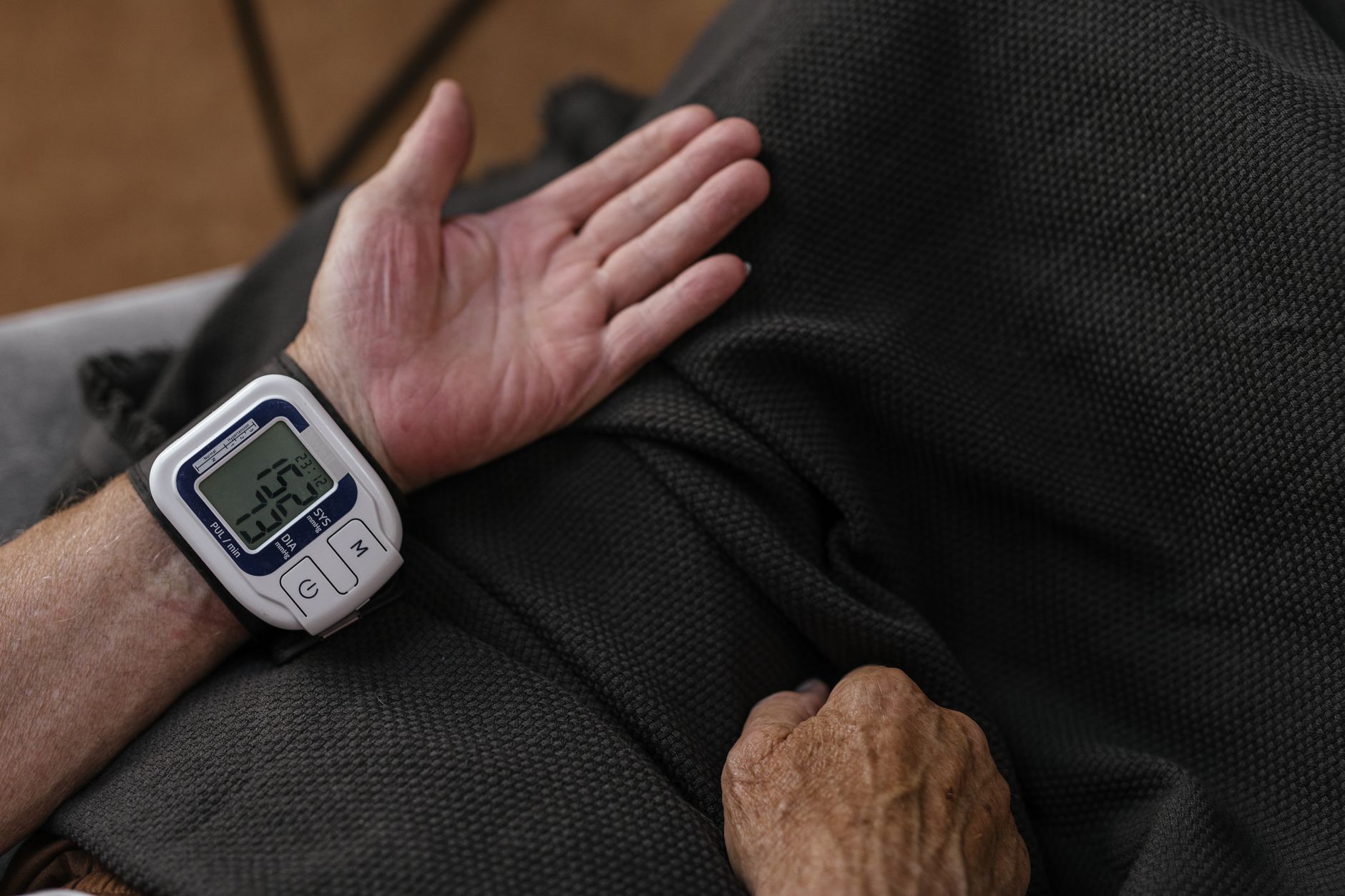
This is where it gets genuinely confusing. There are hundreds of blood pressure monitors on sale in the UK, from cheap wrist devices to upper-arm cuffs with Bluetooth connectivity. The single most important thing to check is whether the device appears on the British and Irish Hypertension Society’s (BIHS) validated device list. Not all monitors are equal, and many cheap wrist monitors in particular have not passed independent clinical validation.
Upper-arm monitors are generally more accurate than wrist ones for most people, though validated wrist monitors do exist and are useful for those with larger arms or certain physical limitations. Brands like Omron, Microlife, and A&D have multiple models on the BIHS validated list. You can expect to pay anywhere from around £25 to £80 for a reliable upper-arm model, and NHS trusts often loan devices out for monitoring periods, so it’s worth asking your surgery before buying.
Cuff size also matters. An adult standard cuff is designed for an arm circumference of roughly 22 to 32 cm. If your arm is larger, a standard cuff will overestimate your blood pressure. Pharmacies like Boots and Well Pharmacy stock a range of cuff sizes, and many chemists will also take readings in-store if you want a second opinion on your technique.
Understanding your numbers at home
The target thresholds for home readings are slightly different from surgery readings. A clinic reading of 140/90 mmHg or above is the standard threshold for diagnosing hypertension, but for home readings, the NICE guidelines use 135/85 mmHg as the equivalent cut-off. This difference exists because home readings are typically a few points lower in the absence of clinical stress.
A single high reading is not a diagnosis. Blood pressure varies naturally throughout the day and responds to everything from a difficult phone call to how much water you’ve drunk. What you’re looking for across a week of readings is a consistent pattern. If your average sits comfortably below 130/80, that’s a healthy range for most adults. If it’s regularly above 135/85, that’s worth discussing with your GP with your recorded numbers in hand.
There’s also value in noting what’s happening when readings are elevated. High readings that cluster around early mornings, for example, can be relevant to cardiovascular risk. Readings that spike alongside disrupted sleep or high stress periods tell a different kind of story. Monitoring gives you data, and data gives your GP context that a single surgery appointment simply can’t.
When to take your readings seriously and contact your GP
A systolic reading above 180 mmHg or a diastolic above 120 mmHg is a hypertensive crisis and requires same-day medical attention. Ring 111 or attend an urgent care centre if this happens and you have symptoms such as chest pain, severe headache, blurred vision, or breathlessness. Without symptoms but with readings consistently in that range, still contact your GP that day rather than waiting.
Outside of crisis territory, I’d suggest booking a GP review if your home average over seven days consistently sits above 135/85, if you notice a sudden change from your usual pattern, or if you have other risk factors like diabetes, kidney disease, or a family history of cardiovascular disease. Low readings matter too. If you regularly see numbers below 90/60 and you’re experiencing dizziness when standing up, that combination is worth flagging.
One thing I find genuinely underrated: the peace of mind that consistent home monitoring offers. For people with health anxiety, the repeated act of taking readings and seeing normal numbers can be more reassuring than a single annual surgery check. Equally, it removes the guesswork. If you’ve been wondering why your numbers are always slightly high at the GP but you feel fine otherwise, a fortnight of home data will almost certainly tell you more than any single appointment could.
On a slightly different note, if you’re building out a home health setup more broadly, it’s worth thinking about your environment too. Everything from noise levels (relevant to stress and blood pressure) to sound quality matters more than we tend to acknowledge. If you’re revamping your home setup, companies like Source Sounds are worth a look for anyone curious about improving their audio environment at home. A calmer, more intentional space, including what you’re listening to and at what volume, has real knock-on effects on relaxation and, by extension, on stress physiology.
The bigger picture here is simple. Blood pressure is one of the most powerful predictors of cardiovascular risk, and it’s also one of the most manageable. Home monitoring turns a once-yearly snapshot into something much more useful. And if noise, poor sleep, and chronic stress are already part of your health picture, as they are for a significant proportion of UK adults, then understanding how your environment affects your physiology gives you somewhere concrete to start.
Frequently Asked Questions
What is white coat hypertension and how common is it?
White coat hypertension is when blood pressure reads higher in a clinical setting than it does in normal daily life, due to the mild stress response triggered by being in a medical environment. The British Hypertension Society estimates it affects 15 to 30 per cent of people who appear to have elevated blood pressure in a GP surgery.
How do I take an accurate blood pressure reading at home?
Sit quietly for five minutes beforehand, support your upper arm at heart height on a flat surface, avoid caffeine or exercise for 30 minutes before measuring, and take two readings one minute apart. Record the average, and repeat this morning and evening for at least seven days before sharing results with your GP.
Which home blood pressure monitors are approved by the NHS?
The NHS recommends using a device validated by the British and Irish Hypertension Society (BIHS). Upper-arm monitors from Omron, Microlife, and A&D have multiple validated models, and the BIHS maintains a publicly searchable list of approved devices. Wrist monitors are available too, but validation is especially important for those.