

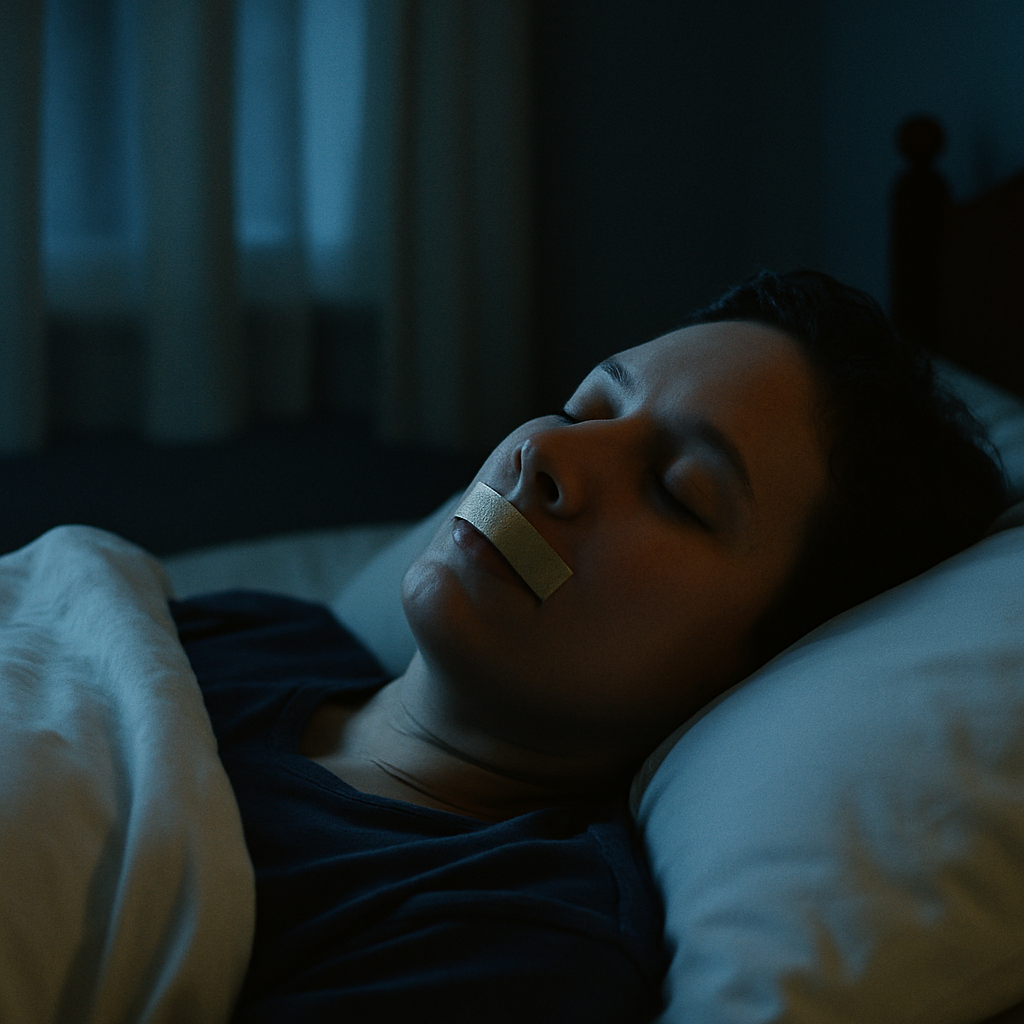
Mouth taping for sleep has moved from the fringes of biohacker forums into the mainstream wellness conversation rather quickly. You may have seen it across social media, with people applying a small strip of tape across their lips before bed and waking up claiming to feel more rested, less congested, and somehow transformed. It sounds odd. Frankly, the first time I heard about it, I thought it sounded slightly alarming. But the trend is real, and it deserves a proper look rather than a dismissal or a breathless endorsement.
The core idea is simple: keeping your mouth closed during sleep encourages nasal breathing, which is considered by many sleep researchers to be the more physiologically efficient way to breathe at night. Nasal breathing filters air, humidifies it, and produces nitric oxide, which helps dilate blood vessels and may support cardiovascular function. Mouth breathing, on the other hand, is associated with dry mouth, disrupted sleep architecture, increased snoring, and even changes to facial structure over time in children.
What Are the Claimed Benefits of Mouth Taping?
Proponents of mouth taping for sleep point to a handful of outcomes that have some grounding in physiology, even if the direct research is still thin. The most commonly cited benefits include reduced snoring, improved sleep quality, lower incidence of dry mouth in the morning, and better overnight oxygen saturation. Some people also report feeling calmer and less groggy upon waking, which they attribute to more consistent nasal breathing throughout the night.
Snoring is often caused by the mouth falling open during sleep, allowing soft tissues in the throat to vibrate. Keeping the mouth closed can reduce that vibration in some cases. A small 2022 study published in the Journal of Clinical Sleep Medicine found that mouth taping with porous tape reduced the apnoea-hypopnoea index in participants with mild obstructive sleep apnoea by a modest but measurable amount. That is encouraging, but it is a small study, and mild sleep apnoea is very different from moderate or severe cases.
On the dry mouth front, the evidence is more intuitive than clinical. If you regularly wake up with a parched mouth, cracked lips, or a sore throat despite being well-hydrated, mouth breathing is likely the culprit. Nasal breathing naturally maintains oral moisture overnight, and many people who try mouth taping do notice that particular complaint resolves fairly quickly.
Is There Real Research Behind Mouth Taping?
The honest answer is: not much yet. The published research is limited in sample size and scope. Most studies involve small cohorts, self-reported outcomes, and short observation periods. The NHS guidance on snoring does not currently recommend mouth taping as a treatment, focusing instead on lifestyle changes such as weight management, reducing alcohol intake, and adjusting sleep position. That does not mean mouth taping is without merit, but it does mean we should be cautious about treating social media success stories as evidence.
What the research does support fairly clearly is that nasal breathing is preferable to mouth breathing for most people. That principle is well-established. The question is whether physically taping the mouth is a safe and effective way to achieve it, and that is where we need more rigorous data.
What Are the Safety Risks?
This is where the conversation needs to be taken seriously. Mouth taping is not universally safe, and skipping this section in favour of the lifestyle appeal would be irresponsible.
The most significant risk involves people who have undiagnosed or untreated obstructive sleep apnoea (OSA). OSA is a condition where the airway partially or fully collapses during sleep. In these cases, the body often instinctively opens the mouth to compensate for blocked nasal passages. If you tape the mouth shut without knowing you have OSA, you may be restricting your only available airway during an apnoea episode. That is dangerous. According to the British Snoring and Sleep Apnoea Association, an estimated 1.5 million people in the UK have OSA, and a large proportion remain undiagnosed.
Other risks include skin irritation and allergic reactions to adhesive tape, anxiety in those who feel claustrophobic, and the very real possibility of nausea at night where a blocked nose combined with a taped mouth could cause discomfort or, in rare cases, aspiration. If you have any nasal obstruction, whether from congestion, a deviated septum, polyps, or seasonal allergies, mouth taping could genuinely compromise your breathing during sleep.
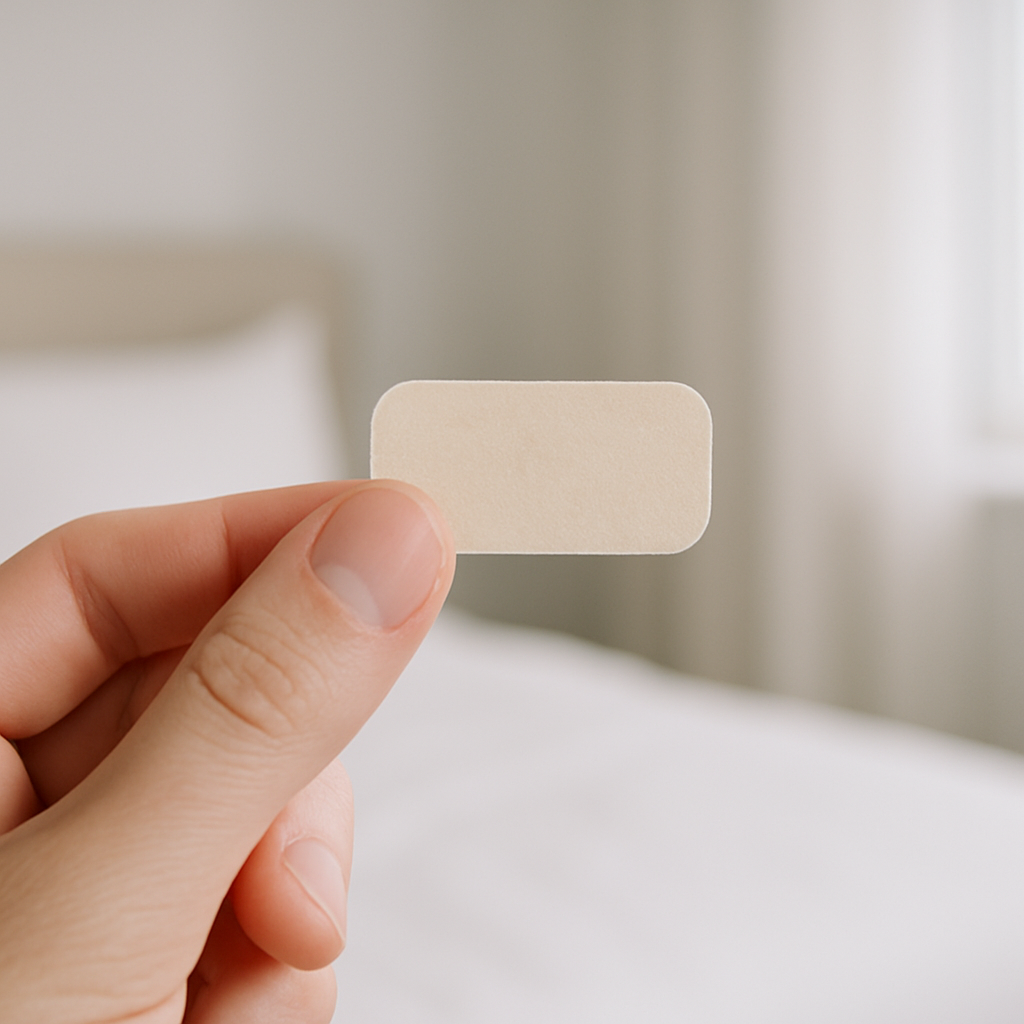
The type of tape matters too. Purpose-made sleep tape products such as SomniShop’s SomniFix strips or similar options use low-adhesive, skin-safe materials specifically designed not to fully seal the mouth. Standard stationery or packing tape is not appropriate and should never be used. Even with proper tape, some people find the sensation distressing enough that it wakes them, defeating the point entirely.
Who Should Avoid Mouth Taping Entirely?
There are clear groups for whom mouth taping for sleep is contraindicated. If any of the following apply to you, do not try this without speaking to a GP or sleep specialist first:
- You have been diagnosed with, or suspect you have, obstructive sleep apnoea.
- You have significant nasal congestion, polyps, or a structural blockage in your nasal passages.
- You experience nausea or acid reflux at night, as taping can increase aspiration risk.
- You have respiratory conditions such as asthma or COPD.
- You take sedative medications that may affect your ability to react if you have trouble breathing during the night.
- Children should not try mouth taping without explicit medical guidance.
If you snore loudly, gasp during sleep, wake feeling unrefreshed regardless of how long you slept, or your partner notices you stop breathing, please see your GP before trying any sleep intervention. These can be signs of OSA, which needs proper assessment and management, not a strip of tape.
How to Try It Safely If You Want To
For otherwise healthy adults with no nasal obstruction and no sleep apnoea risk factors, mouth taping may be worth experimenting with. Start with purpose-made products rather than improvised alternatives. Apply the tape loosely across the centre of the lips rather than fully sealing the mouth from corner to corner. This allows some airflow if needed while still encouraging nasal breathing as the default.
Try it for a week and pay attention to how you feel in the morning. Are you waking with a clearer head? Is the dry mouth better? Are you sleeping more soundly? Those subjective markers matter. If you feel more anxious at bedtime, sleep worse, or wake frequently, it is not the right tool for you, and that is perfectly fine.
Sleep hygiene remains the more evidence-backed starting point for most people. Consistent sleep and wake times, a cool and dark bedroom, limiting alcohol and heavy meals close to bedtime, and managing stress will move the needle far more reliably than any single habit or product. Mouth taping might be a useful addition to that foundation for some people. For others, it may be unnecessary at best and risky at worst.
Interestingly, the wellness space is full of trends that benefit from clear, credible communication, whether that is a sleep coach building an audience or a practitioner whose website design needs to convey trust and authority to clients searching for health support. Context and presentation shape how we receive information, in health as in everything else.
The bottom line on mouth taping for sleep is this: the underlying principle, nasal breathing is better than mouth breathing, is sound. The method of achieving it by taping your lips shut carries real risks if applied without thought. Get screened for sleep apnoea if there is any doubt. Choose the right product. And approach it as one small experiment within a broader commitment to your sleep health, not as a shortcut or a cure.
Frequently Asked Questions
Does mouth taping actually stop snoring?
For some people, yes. Snoring that is caused by the mouth falling open during sleep can be reduced by keeping the lips closed and encouraging nasal breathing. However, if your snoring is caused by obstructive sleep apnoea or structural issues in the airway, mouth taping will not address the root cause and may even be unsafe.
What type of tape should I use for mouth taping at night?
Only use purpose-made sleep tape products, such as SomniFix strips or similar low-adhesive, hypoallergenic options designed specifically for skin contact overnight. Never use stationery tape, gaffer tape, or any adhesive not designed for skin, as these can cause irritation, tearing, and may fully seal the mouth in an unsafe way.
Can mouth taping be dangerous?
Yes, in certain circumstances. The most serious risk applies to people with undiagnosed obstructive sleep apnoea, where taping the mouth shut can restrict the only available airway during an apnoea episode. It is also risky for those with nasal congestion, acid reflux, asthma, or COPD. Always consult your GP if you have any of these conditions before trying it.
Is mouth taping safe for children?
No. Children should not try mouth taping without explicit guidance from a paediatric sleep specialist or GP. Persistent mouth breathing in children can signal underlying issues including enlarged tonsils or adenoids, which require proper medical assessment rather than a behavioural workaround.
How do I know if I have sleep apnoea before trying mouth taping?
Common signs include loud snoring, waking gasping or choking, being told you stop breathing during sleep, and feeling unrefreshed despite a full night in bed. If any of these apply to you, see your GP before trying mouth taping. Your GP can refer you for a sleep study, which may be done at home using a monitoring device provided by an NHS sleep clinic.
Leave a Reply