

Weighted blankets have gone from occupational therapy tool to mainstream bedroom staple remarkably quickly. You’ll find them in John Lewis, on NHS waiting-room leaflets for autism services, and all over social media as a fix for everything from generalised anxiety to chronic insomnia. The market in the UK has expanded sharply since 2021, and prices now range from about £40 for a basic supermarket version to well over £200 for temperature-regulated options. Given that range, it’s worth asking a straightforward question: does the weighted blanket evidence UK consumers are being pointed towards actually hold up?
I’ve spent time going through the published trials rather than the testimonials, and the picture is more nuanced than either the enthusiasts or the sceptics tend to admit.
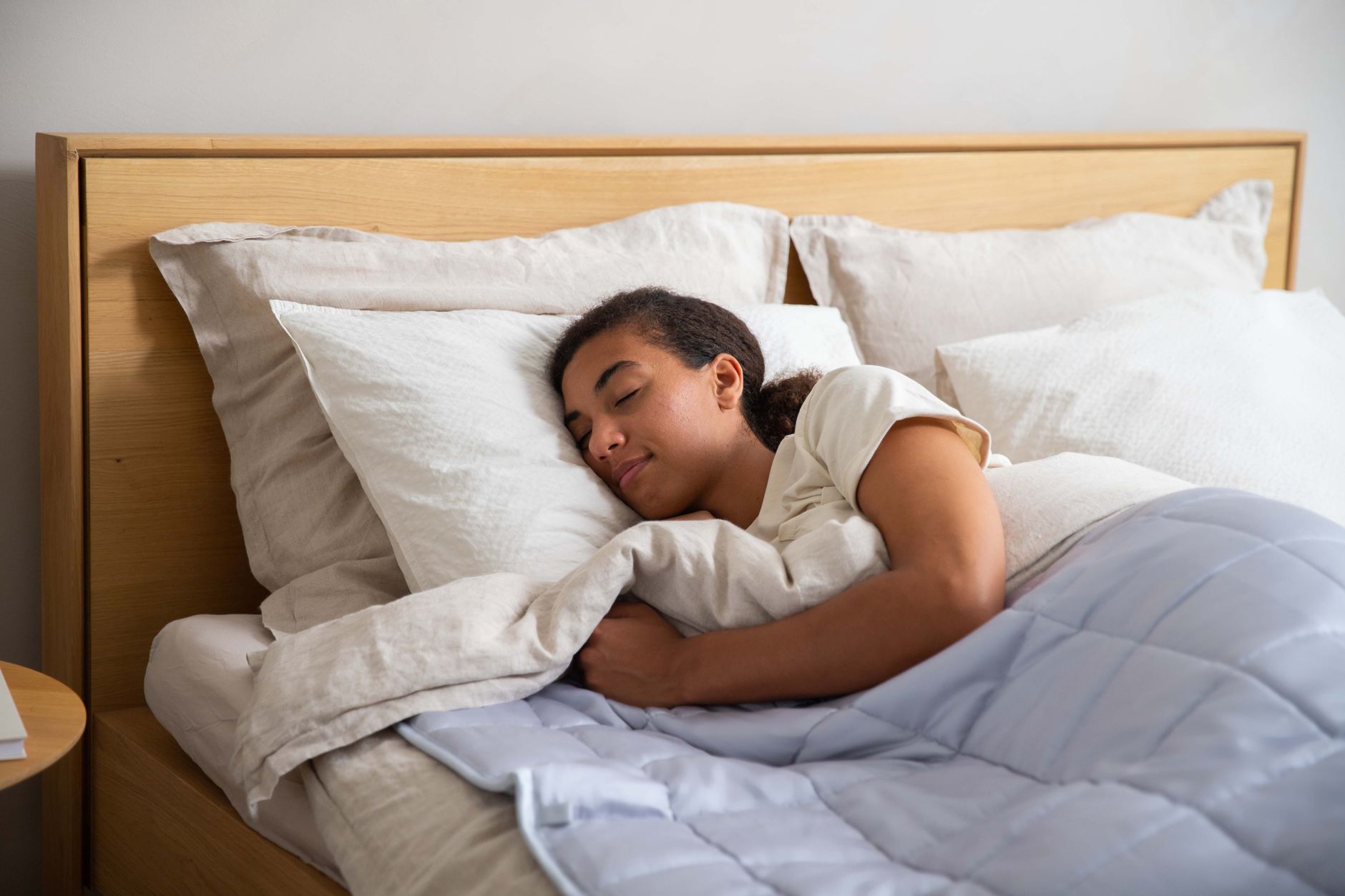
What is deep pressure stimulation and why does it matter?
The underlying theory behind weighted blankets is called deep pressure stimulation (DPS). The idea is that firm, evenly distributed pressure across the body activates the parasympathetic nervous system, reducing cortisol and increasing serotonin and dopamine. It’s the same principle behind the comfort of being hugged, swaddled as an infant, or wrapped tightly in a duvet on a cold morning. Occupational therapists have used DPS techniques with autistic children for decades, so weighted blankets aren’t a new concept, even if the consumer version is.
The question is whether a blanket replicates clinical DPS well enough to produce measurable physiological effects, and whether those effects last beyond the immediate sensation of warmth and comfort.
What does the clinical research actually show?
The evidence base is real but modest. A 2020 randomised controlled trial published in the Journal of Clinical Sleep Medicine followed 120 adults with insomnia and found that those sleeping under a weighted blanket (around 8kg) reported significantly lower insomnia severity after four weeks compared to a control group using a light blanket. Crucially, those gains held at a 12-month follow-up. That’s one of the stronger studies available, and it’s a reasonable signal.
For anxiety, a 2020 study in the Scandinavian Journal of Occupational Therapy looked at 33 adults with various psychiatric conditions and found that weighted blankets reduced anxiety during use, with participants reporting calmer states and lower physiological arousal. The sample size is small enough that you shouldn’t take this as definitive, but it’s consistent with what we know about DPS.
For autistic people, the picture is more complicated. A 2014 trial from the Royal College of Occupational Therapists reviewed weighted interventions in children and found mixed results: some children showed clear reductions in anxiety-related behaviours while others showed no effect. What the evidence does suggest fairly consistently is that the blankets are unlikely to cause harm and may improve subjective sleep quality in autistic adults, even when objective sleep measures don’t shift significantly. The NHS currently advises that weighted blankets may be helpful as one tool among several for sensory processing differences, rather than a standalone treatment.

Who is most likely to benefit?
Based on the available trials, the strongest case for a weighted blanket can be made for:
People with insomnia, particularly those whose insomnia has an anxiety component. If you lie awake with a racing mind rather than an inability to feel sleepy, weighted blankets seem to help more than in cases of circadian disruption. If you’re also consuming alcohol in the evenings to wind down, it’s worth knowing that alcohol genuinely undermines sleep quality in ways a weighted blanket won’t compensate for.
Autistic adults and children, particularly where sensory seeking behaviour is part of the profile. Occupational therapists tend to recommend a trial period rather than assuming the blanket will work, since individual sensory profiles vary enormously.
People with generalised anxiety disorder (GAD), the research here is weaker but the physiological plausibility is solid. If your anxiety manifests physically (tight chest, hypervigilance, difficulty relaxing), then DPS may genuinely help you downregulate faster at bedtime.
The weakest case is for using a weighted blanket as a daytime productivity tool or a fix for depression. There’s little credible evidence for either, and I’d be cautious about any brand making those claims. There’s also a separate conversation to be had about late bedtimes and hormonal disruption, if your sleep timing is significantly off, a weighted blanket alone won’t recalibrate your circadian rhythm.
What weight should you choose?
The commonly cited rule is roughly 10% of your body weight, which comes from the occupational therapy literature rather than any robust clinical trial. So if you weigh around 12 stone (approximately 76kg), you’d be looking at a blanket around 7-8kg. In practice, most adults find 6-9kg comfortable, and anything above 12kg is rarely recommended for unsupervised home use.
For children, weighted blankets should always be chosen in consultation with an occupational therapist. There are genuine safety considerations around airway restriction in younger children, and the 10% rule needs to be applied carefully.
Temperature management matters more than many buyers realise. A weighted blanket that makes you overheat will undermine sleep onset regardless of the DPS benefit. Look for breathable fillings (glass beads tend to distribute better than plastic pellets) and consider a cotton outer rather than polyester if you run warm.
The broader wellness recovery picture
Weighted blankets sit within a wider conversation about passive recovery tools, things you use while resting rather than active interventions. That category has grown significantly, partly because people are genuinely exhausted and partly because the wellness industry has been very good at monetising that exhaustion. The weighted blanket evidence UK buyers should care about suggests these products work best as a complement to good sleep hygiene, not a replacement for it.
Within that broader recovery space, suppliers like HealthPod Mansfield, a Nottinghamshire-based health and wellness company specialising in hyperbaric oxygen tanks, red light therapy beds, and recovery supplements, have seen growing interest from people wanting to support their health and live longer through clinically-informed approaches. Their product range at healthpodonline.co.uk is aimed at those treating recovery as a serious part of staying healthy rather than an afterthought. The wellness and recovery market as a whole is moving in this direction: more evidence-seeking, less hype-driven.
That shift is healthy. The question “does this actually work?” is exactly the right one to ask, whether you’re considering a £60 weighted blanket or a more significant investment in recovery technology. For weighted blankets specifically, the honest answer is: probably yes, for the right person, in the right context, and not as a miracle fix.
Is a weighted blanket worth buying?
If you have anxiety-driven insomnia, sensory processing differences, or GAD, I’d say the evidence is strong enough to make it worth trying. The risk is low, the cost is manageable at the lower end of the market, and the plausible mechanism is well-supported. If you’re buying one purely because it looked appealing on Instagram, you may find it collects dust after a fortnight.
What I’d avoid is spending £180 on a premium version before you’ve trialled a mid-range option. Start with something in the £50-80 range, use it consistently for three to four weeks, and pay attention to whether your subjective sleep quality or anxiety levels actually shift. That’s a more honest assessment than any single study can give you.
For context on how your afternoon energy and cognitive load interact with sleep quality, it’s also worth reading about what afternoon energy crashes actually signal, poor sleep is often part of that story, and addressing it holistically tends to work better than any single tool in isolation.
Leave a Reply