

The number is everywhere. On your smartwatch, on NHS leaflets, in every casual conversation about getting fitter. 10,000 steps a day has become the unofficial unit of personal health in Britain, the figure that separates people who are “active” from people who feel vaguely guilty about sitting down too long. But here is the thing: it did not come from a clinical trial. It came from a Japanese pedometer sold in 1965, marketed under the name manpo-kei, which translates roughly as “10,000 step meter”. The target was, by most historians’ accounts, a commercial hook. So why are we still treating it as gospel?
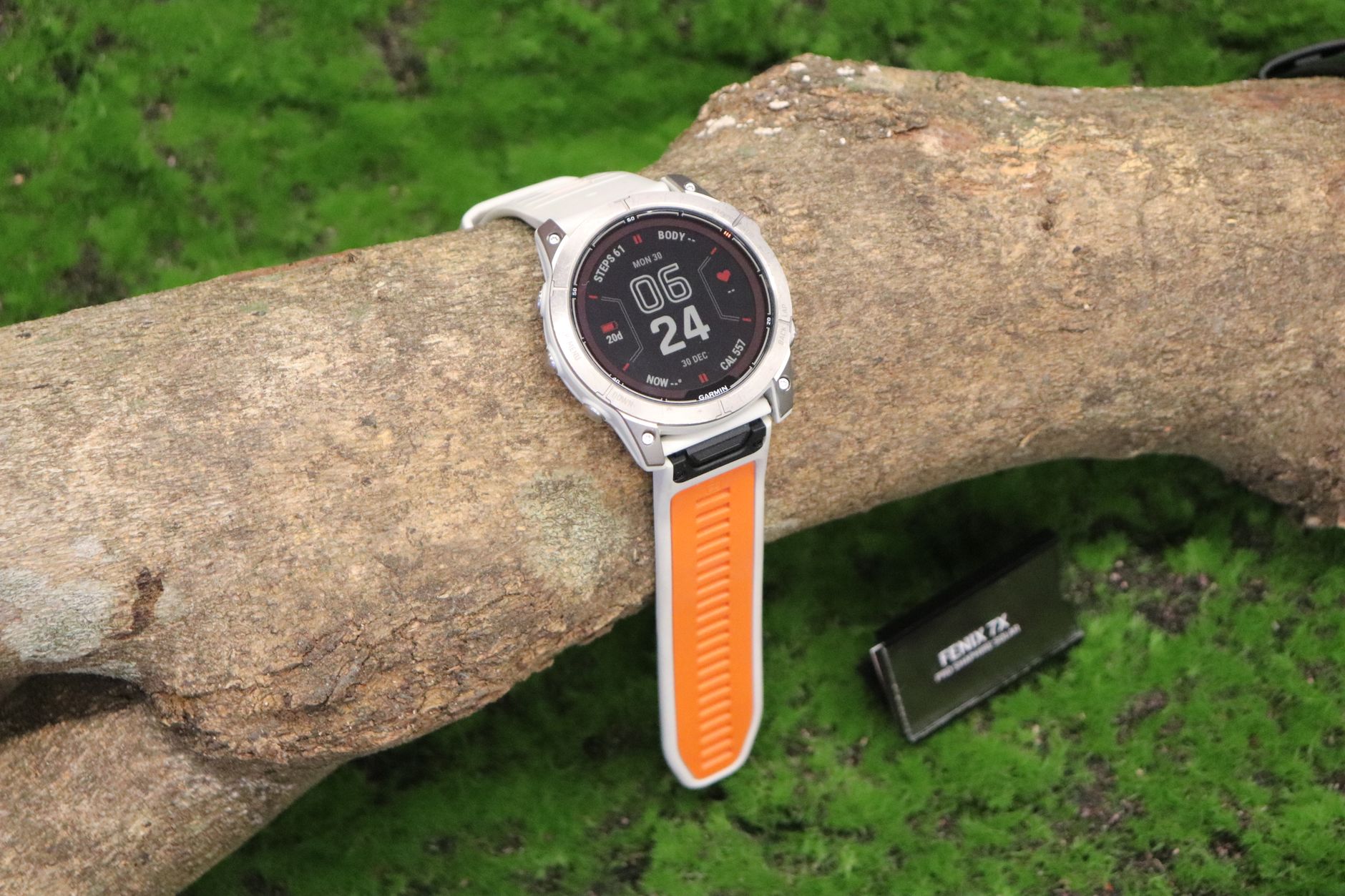
Where the 10,000 steps figure actually came from
The manpo-kei device was released ahead of the 1964 Tokyo Olympics, riding a wave of public interest in fitness. Its creators chose 10,000 partly because the Japanese character for 10,000 resembles a person walking, making it a neat bit of product branding. There was no peer-reviewed research behind it. No controlled study comparing 8,000 steps against 12,000 and measuring health outcomes over a decade. Just a number that sounded satisfying and round enough to catch on globally.
This is not a minor footnote. The fact that one of the most widely repeated health targets in the UK was born from marketing rather than medicine should at least prompt us to ask better questions about what daily movement actually means for our health.
What the research on step counts actually shows
The good news is that real research into step counts has caught up considerably in recent years, and the picture is more interesting than the headline number suggests.
A large 2022 study published in Nature Medicine, drawing on data from over 78,000 adults, found that health benefits increased steeply up to around 9,000 to 10,500 steps per day, then plateaued. People walking fewer than 4,000 steps daily showed measurably higher risks of cardiovascular disease, type 2 diabetes, and all-cause mortality. The benefit curve was real, but 10,000 was not the magic threshold. Around 7,000 to 8,000 steps appeared to capture most of the gain for most adults, particularly those over 60.
Separately, a 2021 study from Harvard Medical School followed over 16,000 older women and found that mortality risk dropped significantly up to around 7,500 steps a day, with little additional benefit beyond that point for that age group. The NHS itself has quietly shifted its language in recent years, emphasising that “every step counts” rather than insisting on any fixed number.
Intensity matters as much as volume
Here is where the step count conversation gets genuinely more useful. Counting steps alone tells you nothing about how hard your body is working. A slow meander around a supermarket counts the same as a brisk walk through a park, but the physiological effect is completely different.
Research consistently shows that moderate-intensity movement, the kind where your breathing quickens and you could hold a conversation but would struggle to sing, produces significantly greater cardiovascular and metabolic benefit than the same distance covered at a gentle stroll. This is why VO2 max, your body’s measure of cardiorespiratory fitness, is considered a stronger predictor of long-term health than daily step totals. A person walking 6,000 steps at a purposeful pace may well be doing more for their heart health than someone ambling 11,000 steps between the sofa and the kettle.
The UK’s Chief Medical Officers’ guidelines (updated in 2019 and still current) recommend at least 150 minutes of moderate-intensity activity per week for adults, or 75 minutes of vigorous activity. Step count does not appear in those guidelines at all. That is telling. You can read the full UK physical activity guidelines on gov.uk and you will not find the words “10,000 steps” anywhere in the clinical recommendations.
The case for incidental movement
One thing that step-counting does capture reasonably well is incidental movement: the background physical activity that accumulates through your day without you formally exercising. Taking the stairs, walking to the shops, doing housework, pottering about the garden. This kind of low-intensity, distributed movement is genuinely valuable, and there is growing evidence that breaking up long periods of sitting matters independently of whether you then go for a run.
As I have written about before, the issue of afternoon energy dips is often linked to prolonged sedentary stretches, not just sleep quality or what you ate at lunch. Short movement breaks every 45 to 60 minutes appear to help regulate blood sugar and maintain alertness in ways that a single morning walk cannot fully replicate.
From that angle, a step counter is not useless. If it nudges you off the sofa mid-afternoon or reminds you that you have not moved in three hours, it is doing something real. The problem is when the number replaces critical thinking. When someone hits 10,000 steps via a gentle Sunday wander and concludes they have “done their exercise”, the target has arguably made things worse.
A better way to think about daily movement
I would suggest treating step count as one signal among several, rather than a pass or fail threshold. Ask yourself a few better questions alongside it. Did any of today’s movement get my heart rate up meaningfully? Did I break up long sitting periods, or was I sedentary for four hours at a stretch? Did I do any movement that involved load-bearing or resistance, particularly important as we age and the risk of muscle loss increases after 50?
Steps alone cannot answer any of those. What they can do is give you a rough baseline sense of how much you moved, which is genuinely useful if your starting point is very low. Getting from 2,000 steps to 6,000 steps a day is a meaningful health shift. Getting from 9,500 to 10,000 to satisfy a watch notification is not.
There is also a psychological dimension here worth taking seriously. Rigid numerical targets can create an all-or-nothing mindset: if it’s 7pm and you are on 6,800 steps, do you stress about it, or do you just go to bed? Fixating on a single metric can erode your relationship with movement generally, which is the opposite of what any of this is supposed to achieve. Good movement habits are built on intrinsic motivation and variety, not on a number a Japanese pedometer company invented to sell units. (It is worth noting that plenty of health tech companies today, some of them promoted through digital agencies like dijitul, have a similar interest in keeping users engaged with their apps and platforms.)
So should you still count your steps?
If it helps you stay consistent, yes. If it stresses you out, causes you to game the number rather than genuinely move, or gives you false reassurance about the quality of your activity, then it may be doing you a disservice. The research does support the idea that more steps generally correlates with better health outcomes, especially at the lower end of the range. But the relationship is not linear, intensity matters significantly, and no single metric captures what a healthy, active life actually feels like.
Use the number as a prompt, not a verdict. Move with some purpose, break up your sitting, get your heart rate up a few times a week, and do not let a round number dreamt up in 1960s Japan become the primary way you judge whether you took care of yourself today.
Leave a Reply